To optimize putting mechanics, start with a setup you can repeat, then check your start line and distance control separately. A steadier stroke can help if missed short putts and long first putts regularly cost you shots. Driving, approach play and chipping still matter; putting deserves a purposeful share of your practice.
The aim is a useful next putt. From close range, give the ball a reliable start on your chosen line. From farther away, control its pace so that a miss leaves a manageable second attempt. This blueprint gives you setup checkpoints, a comfortable grip and a ten-minute routine you can measure.
1. Optimize Putting Mechanics With a Comfortable Setup
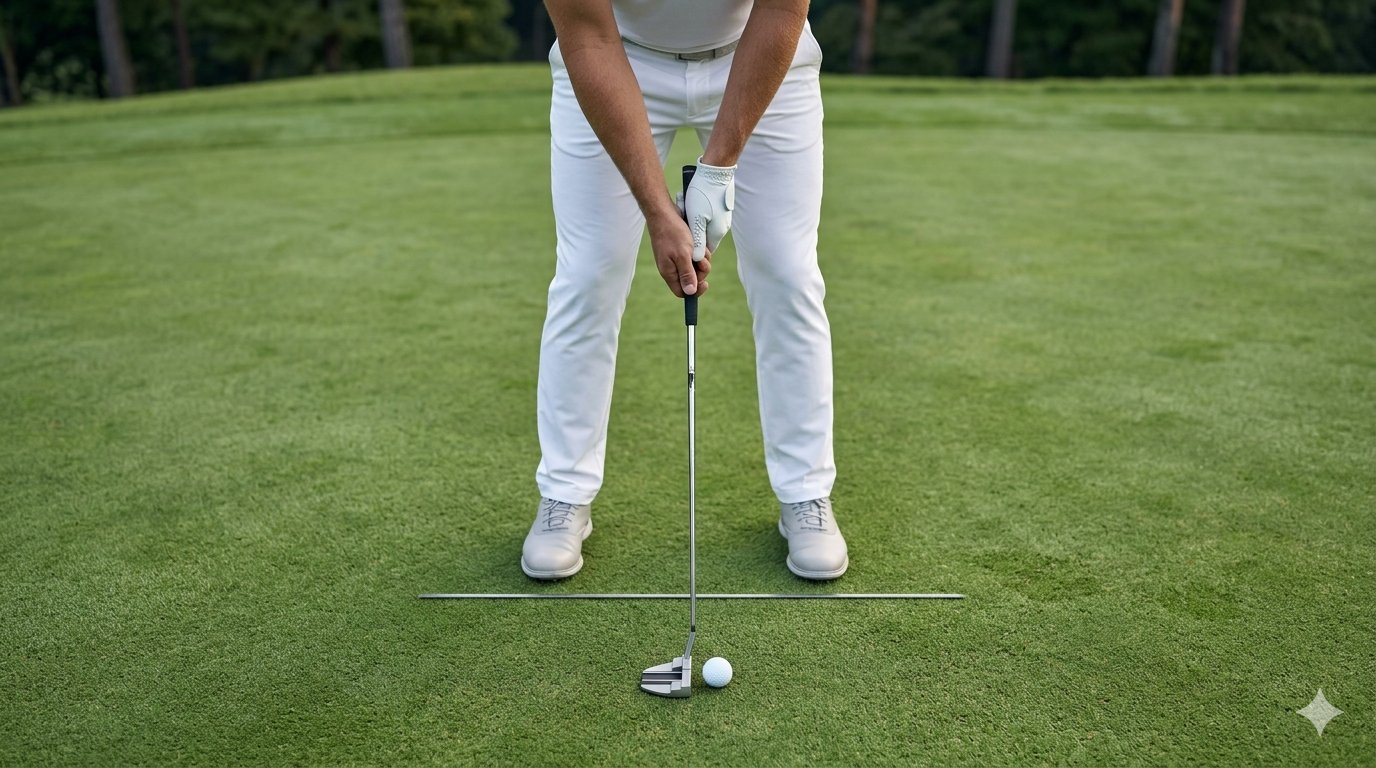
A good setup lets the arms hang naturally and the putter return to the ball without strain. Begin on a fairly flat practice putt, where a missed start is easier to identify. Make small adjustments rather than rebuilding your posture after every miss.
- Stance: Choose a balanced width, roughly hip-width to shoulder-width as a starting range. Keep your knees soft and unnecessary lower-body movement small. You should feel settled without bracing your legs or tightening your back.
- Eyes and posture: Eyes approximately over the ball or slightly inside its line are common checkpoints. Find a comfortable position from which you can aim consistently. Avoid reaching your neck forward simply to meet a prescribed eye position.
- Ball position: Try the ball slightly forward of the middle of your stance. Look for repeatable contact rather than trying to scoop it upward. Ball position alone cannot guarantee immediate roll; putter delivery, loft and the surface also influence how the ball leaves the face.
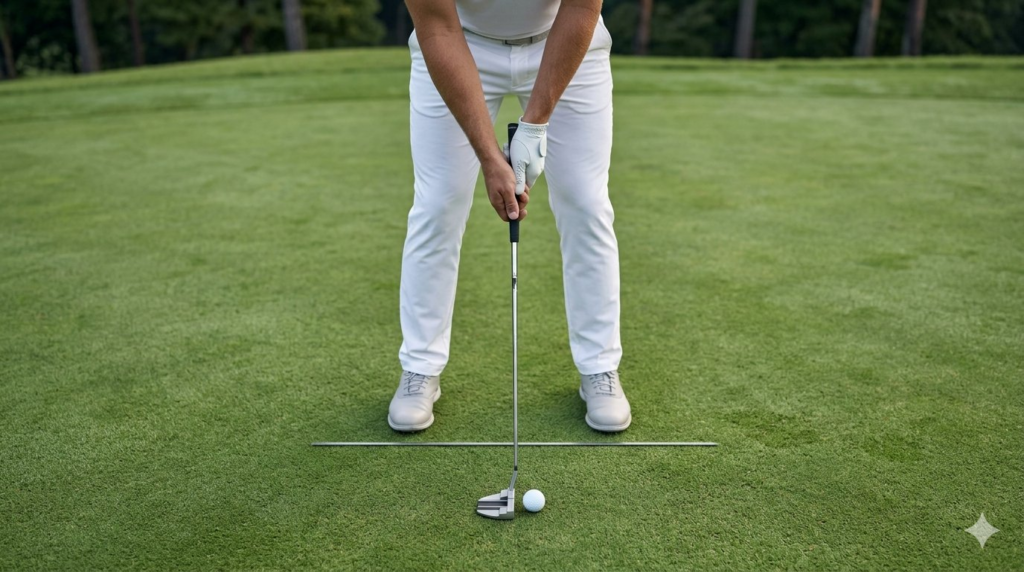
During practice, an alignment rod beside your feet can help you notice changes in your setup. Place it parallel to the intended starting line and clear of the stroke. Keep the aid for practice rather than taking that setup station onto the course.
2. The Grip: Encourage Quieter Hands
An unwanted wrist flick can change the face angle or add a sudden burst of speed. Your grip should help both hands work together while leaving enough comfort to feel the weight of the putter. The handle does not physically lock your wrists, and no single hold suits every golfer.
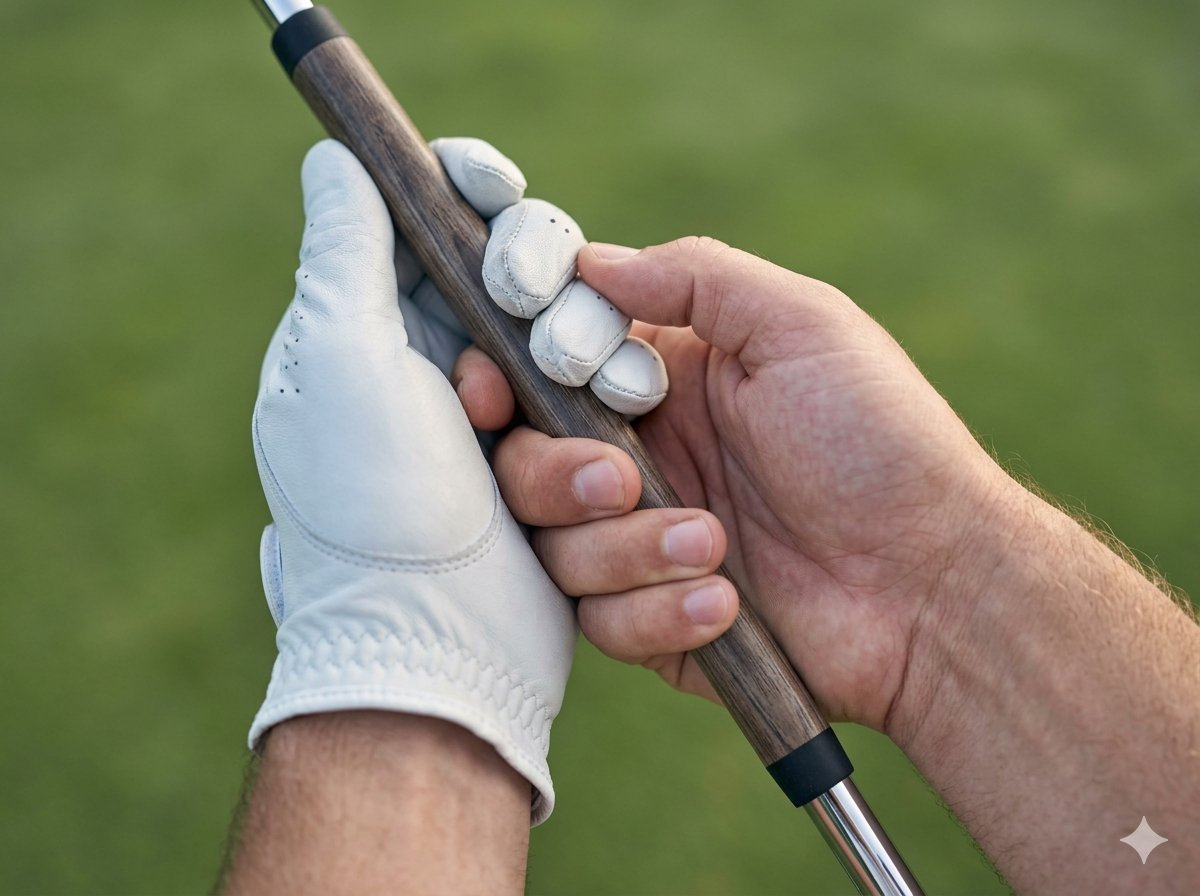
- Placement: With a conventional grip, try holding the handle more through the palms than you would for a full swing. Let your arms remain relaxed. If that feels awkward, a coach can help compare a conventional, lead-hand-low or claw grip.
- Pressure: Hold the handle securely without squeezing unnecessarily. Notice whether your pressure increases as the putter changes direction. Rehearse a few strokes with the same comfortable hold before adding a ball.
Changing grips is worth testing when it addresses a recurring problem. If your current hold already produces consistent starts and pace, put your practice time into those results before chasing a different appearance.
3. The Motion: Rhythm Without Rigidity
A pendulum is a useful image for an unhurried stroke, but your arms are not a rigid machine. Let the shoulders, arms and hands work together. Maintain a comfortable connection while avoiding a deliberate wrist jab or an attempt to steer the face after contact.
- Keep the shape comfortable: Your arms and shoulders form a loose triangle at address. Use that as a feel for coordination, without locking your elbows or forcing an exact shape throughout the stroke.
- Repeat a rhythm: Try a simple two-syllable phrase as you swing back and through. Keep the cadence familiar while allowing stroke size and speed to change for distance. Exactly equal backswing and follow-through lengths are not a requirement.
- Finish before looking: Keep your gaze quiet through contact and hold the finish briefly. Once the ball has started rolling, follow it to learn about the pace. You do not need to keep your head down until a long putt reaches the cup.
4. Alignment: Match the Starting Line to the Pace
The face angle at impact strongly influences the ball’s initial direction. Aim the face at the line you want the ball to start on, which may be away from the hole on a breaking putt. Build a comfortable stance around that aim; avoid forcing the putter to travel perfectly straight if a gentle arc feels natural.
Start line and speed work together. A firmer putt can take a different amount of break from a softer one, and poor pace can turn a reasonable line into a difficult second putt. Before addressing the ball, choose the intended roll and make a rehearsal stroke that matches it. Then commit to the combination.
An alignment line on the ball may help you aim. Test it against putting without one on the same short putt, and judge the results rather than the appearance. USA Golf Magazine’s guide to golf ball alignment systems explains the differences between common visual aids.
5. A Ten-Minute Practice Plan You Can Measure
Use a quiet part of the practice green and keep clear of other players’ putting lines. Start with forgiving targets. The purpose is to learn whether a miss comes from the start, the pace or the read, rather than to prove you can make every putt.
- Minutes 0–2: Settle the setup: Make several rolls from three feet on a fairly flat putt. Check your balance, grip pressure and contact. Keep one setup cue for the rest of the session.
- Minutes 2–5: Test the start: Place two tees about a foot ahead of the ball, leaving a generous gap for it to roll through. Hit ten putts through the gate and count clean starts. Widen the gap if you are mostly hitting tees, then narrow it as control improves.
- Minutes 5–9: Train the leave: Alternate putts from roughly 15, 25 and 35 feet. Aim to finish within about three feet of the hole, whether short, long or beside it. Count successful leaves and notice whether misses cluster short or long.
- Minutes 9–10: Use your playing routine: Remove the aids. Putt one ball from a new position, use your full routine and hole out. Record the total putts, then repeat that test at your next session.
Measure Progress Before Changing Everything
Track clean starts, first-putt proximity and the number of three-putts over several sessions and rounds. Total putts alone can mislead because the distance of your first putt changes. Consistent starts suggest that green reading or pace may deserve attention; scattered starts point toward aim, strike or face control.
If the same problem persists, a PGA coach or putter fitting can check your setup, aim and equipment fit. Keep the goal realistic: reduce avoidable three-putts and improve short-putt reliability. A repeatable routine gives you something useful to trust when the next score depends on a few feet of green.