Research basis
USA Golf Magazine did not physically test these balls. This guide compares current official Callaway product information with peer-reviewed research about generic ball-alignment marks. No independent study in the evidence set tests these exact Callaway systems, so every alignment effect remains Not Rated.
Choose the golf ball first and its printed alignment system second. A line can make one golfer’s setup feel organized and make another golfer aim worse or become too mechanical. The current evidence does not support calling any Callaway pattern a universal winner.
As of August 15, 2026, Callaway listed each of the four current models below at $57.99 per dozen in the U.S. and showed each model in stock. Price and availability can change. The feel and spin descriptions in this guide are Callaway’s category positions, not USA Golf measurements.
Four Current Options, With No Invented Ranking
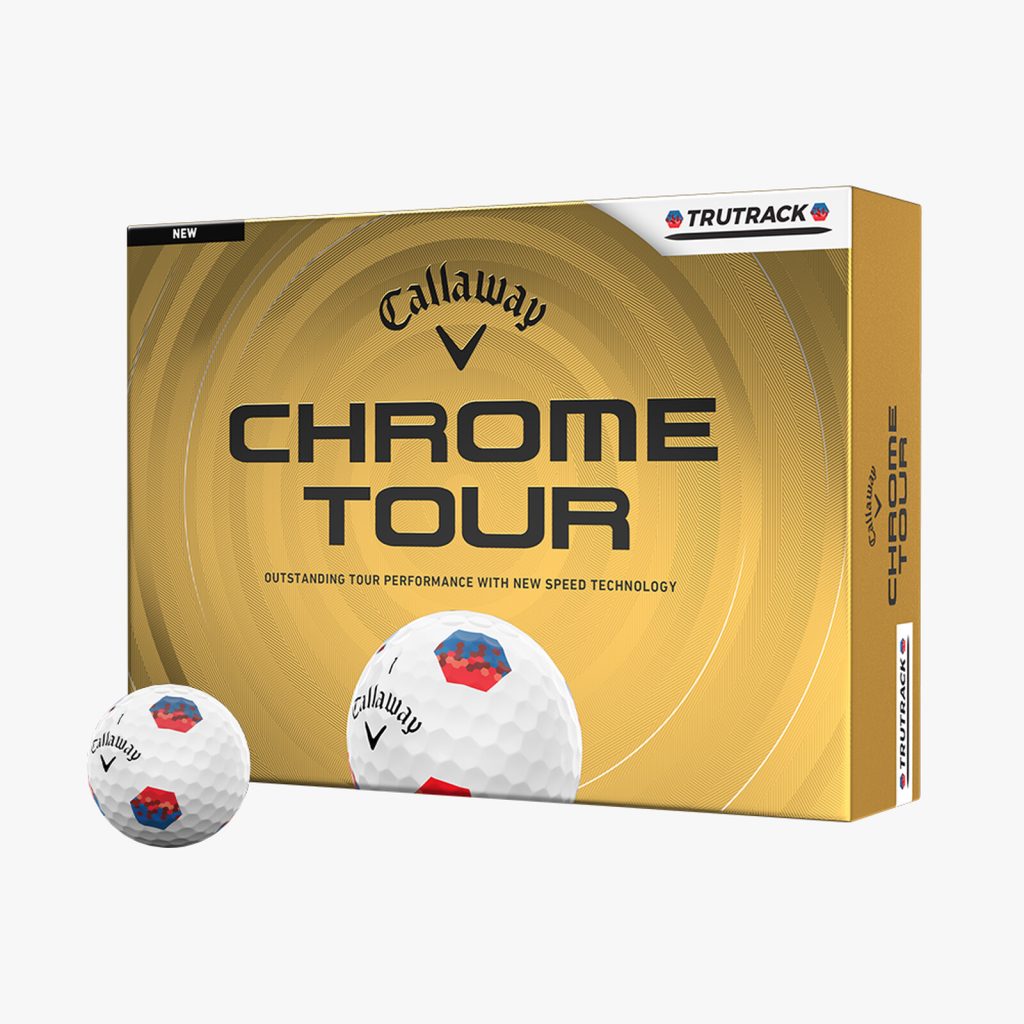
Chrome Tour TruTrack
Alignment effect: Not Rated
The TruTrack pattern combines a line with block-like color elements that can provide visible roll feedback. Choose it only after the medium-feel Chrome Tour ball itself fits your full-game needs.
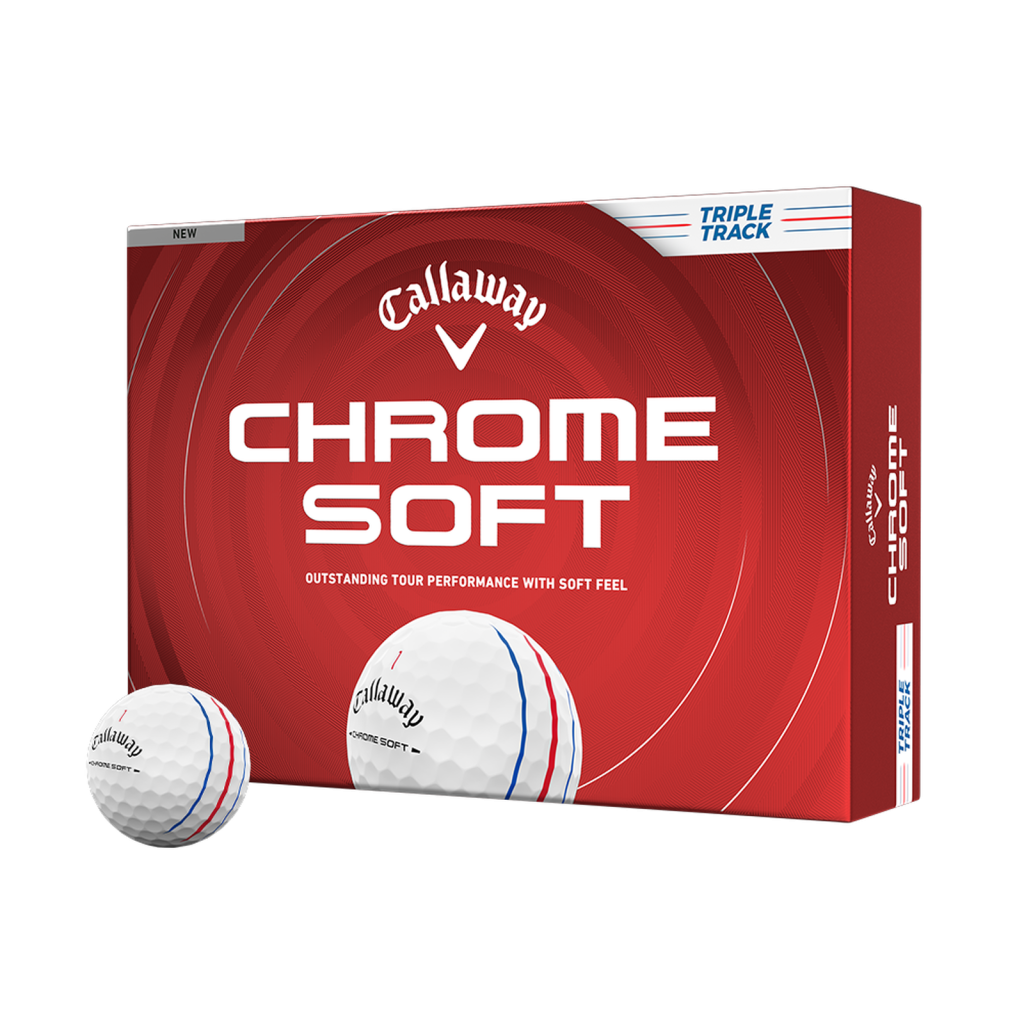
Chrome Soft Triple Track
Alignment effect: Not Rated
The shorter three-line pattern is the least wraparound option in this group. The underlying Chrome Soft platform is the softer-feel choice in Callaway’s published comparison.
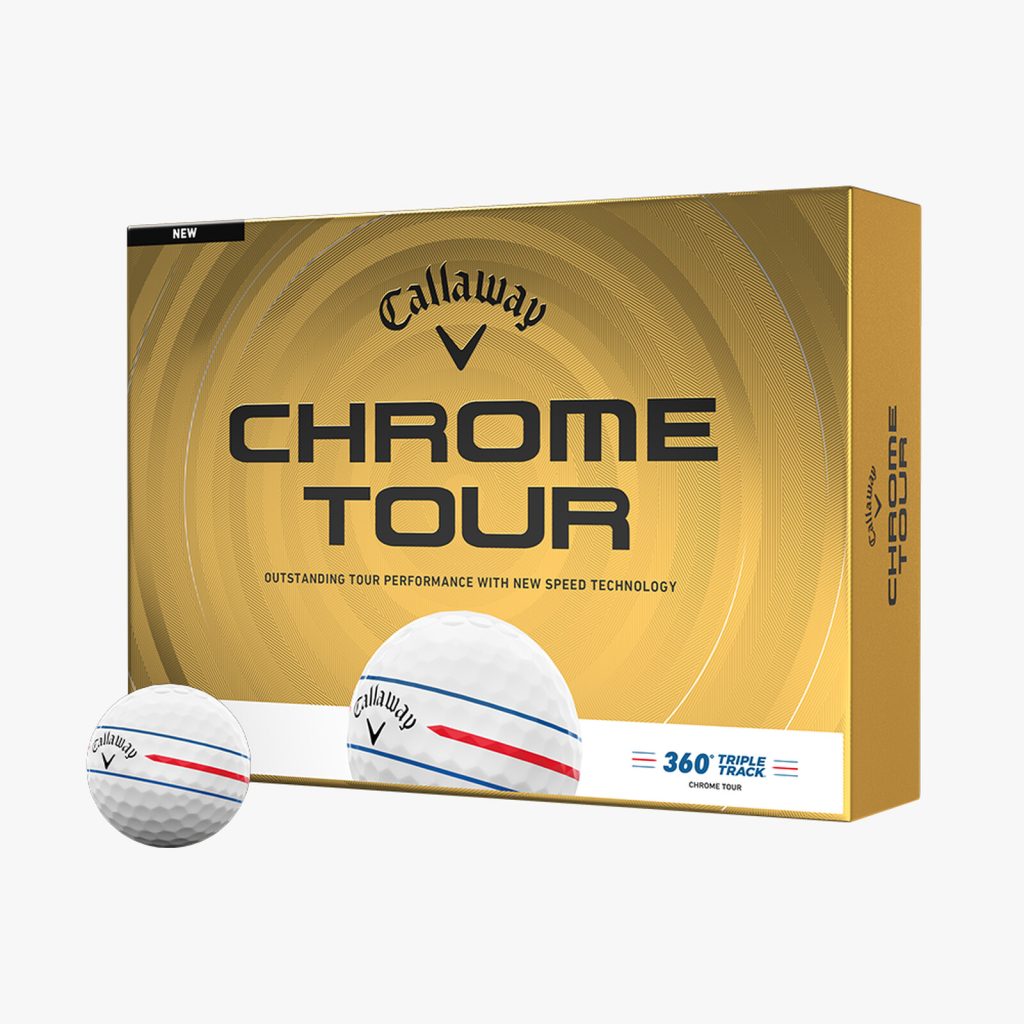
Chrome Tour 360 Triple Track
Alignment effect: Not Rated
The three-line pattern wraps around the ball, creating a longer visual reference. It uses the same medium-feel Chrome Tour family position as TruTrack; the printed system should break the tie, not choose the ball.
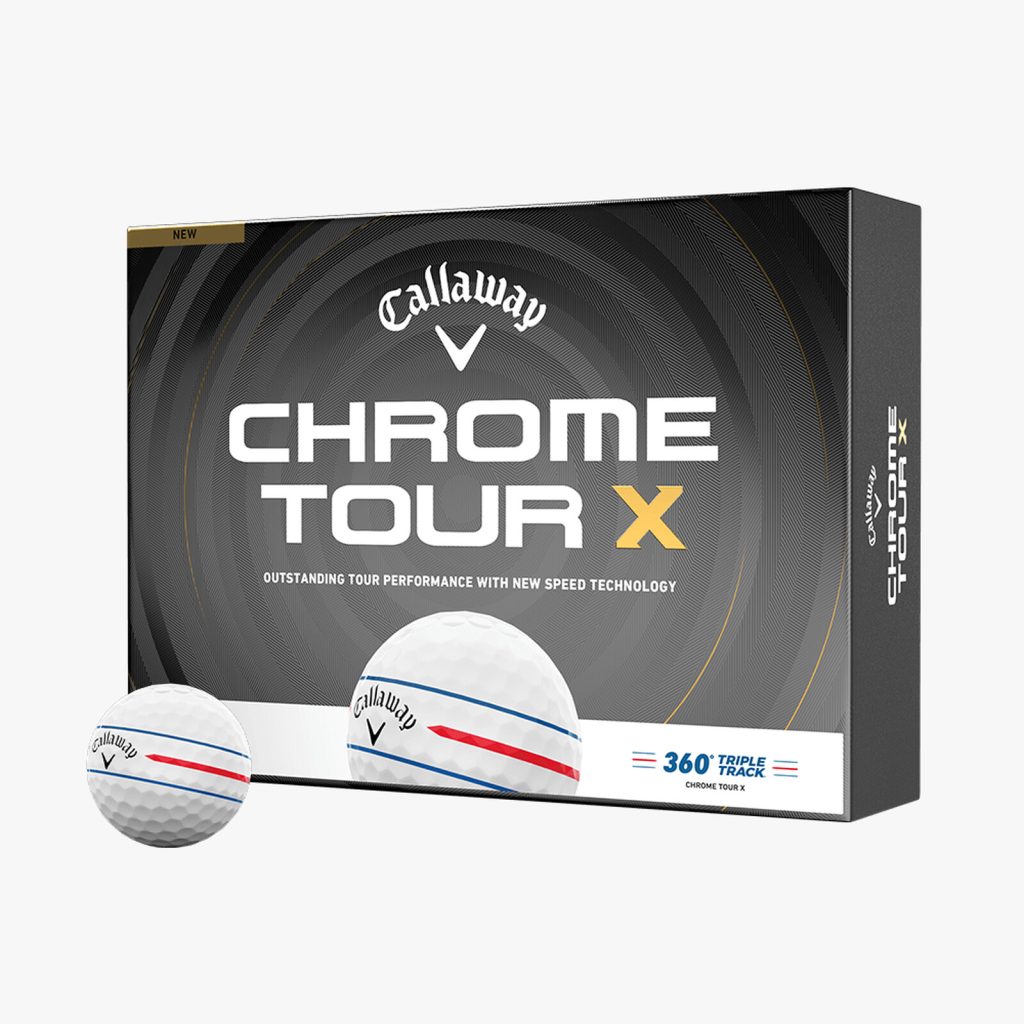
Chrome Tour X 360 Triple Track
Alignment effect: Not Rated
This is the wraparound option on the firmer Chrome Tour X platform. Callaway positions Tour X with more long-game and short-game spin than Chrome Tour, so do not switch to it for the line alone.
Image note: Exact 2026 product images were obtained from the linked official Callaway product pages for this Local-only evaluation. Publication rights have not been confirmed, so these assets remain blocked from a live deployment.
What the Alignment Research Actually Says
The evidence is mixed. A 2012 controlled study involving 48 participants reported no overall improvement in putting accuracy or consistency from using a ball line. A 2014 study reported improved putting performance with an alignment mark. A 2025 motion-capture study of 18 right-eye-dominant men with no prior golf experience found that a line changed address alignment, with results also interacting with blade and mallet putter conditions.
Those studies used generic marks, small or narrow samples, and different methods. They do not establish that Triple Track, 360 Triple Track, or TruTrack holes more putts for an experienced player. The most responsible conclusion is a fit decision: test whether a visible reference improves your own start line and routine.
How the Visual Systems Differ
TruTrack
TruTrack uses a line plus colored geometric blocks. Callaway describes it as roll-feedback technology. The useful buyer question is whether the extra shapes make face alignment and roll easier to see or simply add visual noise.
Triple Track
Triple Track uses three parallel colored lines in a shorter printed area. It may suit a golfer who wants an obvious directional reference without a design wrapping around the entire ball.
360 Triple Track
360 Triple Track extends the three-line pattern around the ball. The longer reference can be easier to find and set behind the ball, but it is also the most visually dominant option here. That can be helpful or distracting depending on the golfer’s eye position, putter shape, and routine.
The Underlying Ball Still Matters More
Source: Callaway’s 2026 Chrome family comparison. These are manufacturer classifications, not independent USA Golf results.
A Five-Minute Personal Fit Check
- Choose a flat 6-foot putt and place a small start-line gate about 3 feet from the ball using two tees slightly wider than the ball.
- Hit 5 putts with the printed line aimed at the target.
- Rotate the same ball so the line is out of view and hit 5 more.
- If available, repeat 5 putts with the alternative pattern you are considering.
- Record gate passes and whether you trusted the setup. Do not change stroke mechanics during the comparison.
Fifteen putts are not a universal product test. They are a low-cost way to discover whether the visual aid helps your routine before buying several dozen. Repeat the comparison on another day if the first result is close.
Try or Skip
- Try TruTrack if visible roll feedback helps you diagnose whether the ball started and rolled as intended.
- Try Triple Track if you prefer a shorter directional cue and a softer underlying ball.
- Try 360 Triple Track if a long, easy-to-find reference makes setup simpler.
- Skip all printed aids if you aim more naturally from the blank side of the ball or become distracted by precise line placement.
What Evidence Would Support a Rating?
An exact-system rating would need more than generic line research. A useful comparison would keep the underlying ball construction constant, randomize line-visible and line-hidden conditions, include enough experienced golfers to examine different aim tendencies, and report both start-line and make-rate results across more than one session. Putter shape, eye position, line preference, and prior familiarity should also be recorded.
Until that kind of independent evidence exists for these exact prints, converting the mixed studies into a Callaway score would create false precision. Not Rated is the finding, not a missing editorial step.
Buy Without Overcommitting
If you already play one of these ball families, buy the smallest practical quantity of the new print and compare it with the plain version. If you do not already play Chrome Soft, Chrome Tour, or Chrome Tour X, test the underlying ball fit first. A visual preference is not a good reason to accept the wrong flight, feel, or short-game response.
Sources and Limits
- Shim, Miller, and Lutz (2012) — generic ball-line study; not an exact Callaway-system test.
- Stenner and Buckley (2014) — reports a benefit from a generic alignment mark; method differs from the 2012 study.
- Chae and Jung (2025) — 18 novice men, three trials per condition, and no Callaway product; useful for putter/line interaction only.
- Callaway 2026 Chrome family comparison — manufacturer source for product identity, family position, and current U.S. price context; no independent performance vote.
For the site’s source roles, scoring gates, and hands-on labels, read How USA Golf Magazine Reviews Golf Gear.