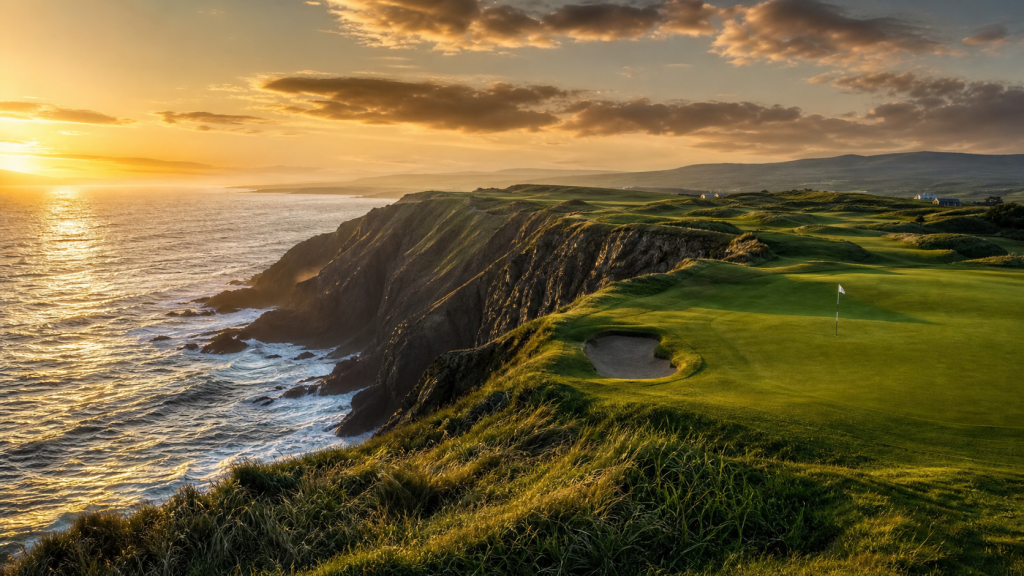
There is a specific brand of exhaustion that sets in after a week on the west coast of Ireland. It is born from walking miles of towering dunes, calculating 30-yard bump-and-runs through the salt air, and battling weather that can cycle through four seasons in a single round. The “Wild Atlantic Way” is not just a scenic driving route; it is the most raw, unforgiving, and romantic stretch of links golf on the planet.
For the 2026 travel season, the Atlantic Run demands more than just a passport and a booked tee time. It requires a specific architectural mindset, specialized outerwear, and the endurance to chase the late summer light until 10:00 PM. Here is your blueprint for conquering Ireland’s rugged western edge.
The Route: Towering Dunes and Blind Shots
The beauty of the Southwest Irish loop is the sheer scale of the dunescapes. These are not flat, subtle links; they are towering, violent clashes of sand and sea.
- Lahinch Golf Club: Often called the “St Andrews of Ireland,” Lahinch is a masterclass in quirk and charm. Designed by Old Tom Morris and later refined by Alister MacKenzie, it sits right on the edge of a vibrant surfing town. Prepare for blind shots over massive dunes—most famously, the par-3 Dell hole—where trusting your caddie’s line is a matter of survival.
- Ballybunion (Old Course): The graveyard by the first tee sets the tone. Ballybunion is narrow, visually intimidating, and relentlessly brilliant. The course weaves precariously through a labyrinth of fescue-covered dunes right on the cliff’s edge. Keep your ball flight out of the sky.
- Tralee and Waterville: As you move further south, the black rocks and ocean vistas become even more dramatic. Tralee’s back nine is arguably the most scenic stretch in global golf, while Waterville provides a pure, unadulterated championship test that perfectly balances coastal winds with pristine turf conditions.
Comparison Table
The Late Light: Maximizing the Irish Summer
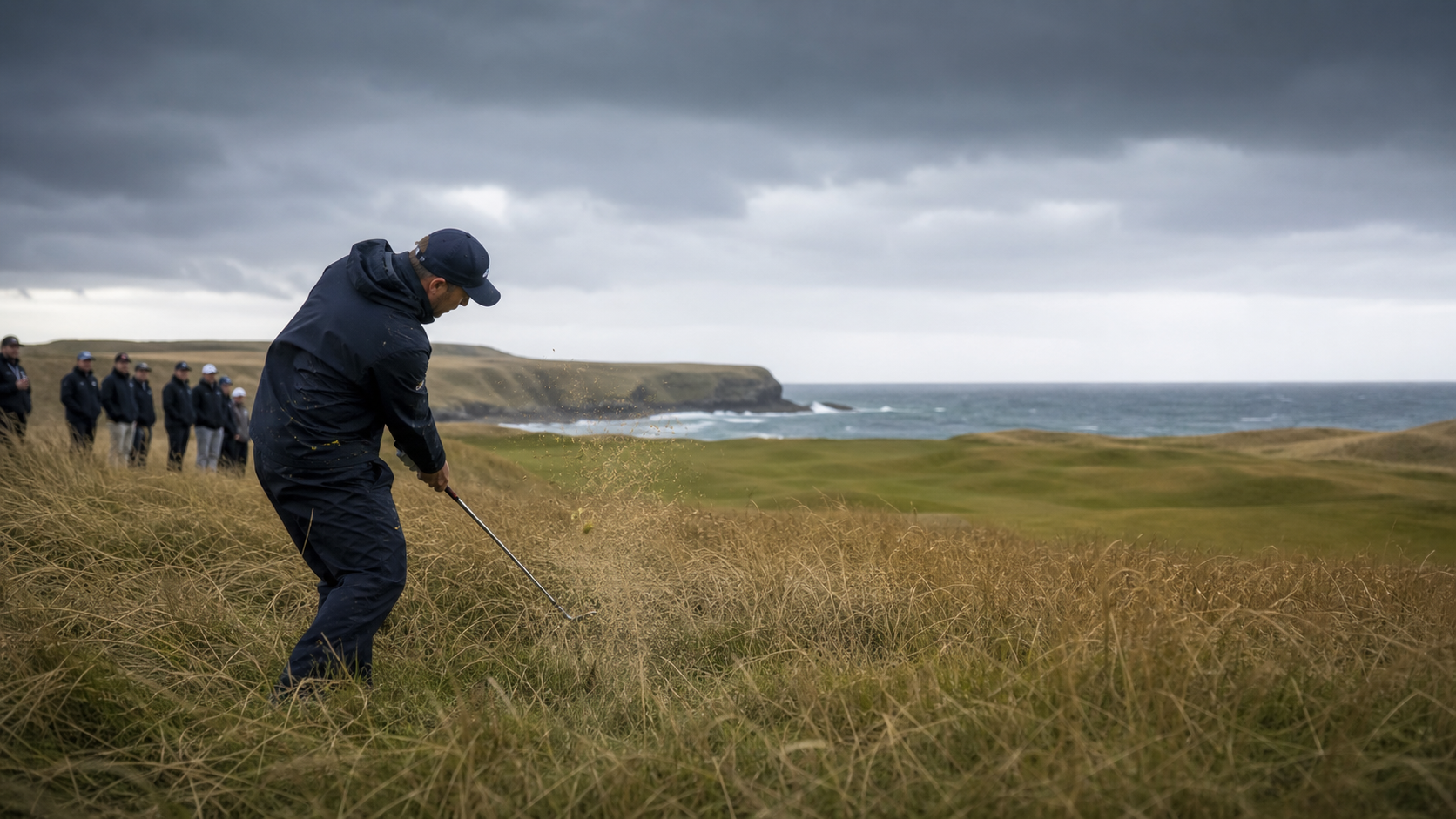
One of the greatest tactical advantages of an Irish golf trip in June or July is the daylight. Because of its latitude, the sun doesn’t truly set until past 10:00 PM. This unlocks the “Late Light Fairway” strategy.
Instead of cramming 36 holes into a rushed 8:00 AM to 5:00 PM window, take your time. Play your marquee round in the morning, enjoy a massive, slow lunch in the village, and tee off for your second round at 5:30 PM. The winds often die down in the evening, casting long, dramatic shadows across the dunescapes, creating the purest aesthetic experience in the sport.
Technical Gear: Armor for the Atlantic
The Irish coast does not care about the weather forecast. You will get rained on, and you will get blown around. Bringing the wrong gear is the fastest way to ruin a $5,000 trip.
| Gear Category | Recommended Specification | Why It Matters |
|---|---|---|
| The Outer Shell | Tour-Grade 100% Waterproof Suit | Do not bring “water-resistant” pullovers. You need fully seam-sealed, stretch-fit Gore-Tex (like the premium lines from Sun Day Red or Galvin Green) that allows for full rotation while keeping you bone dry. |
| Hand Protection | Rain-Grip Gloves (3+ Pairs) | Standard cabretta leather turns into an ice rink when wet. Rain gloves actually increase traction the wetter they get. Keep extras in plastic bags inside your golf bag. |
| Thermal Base Layers | Merino Wool Blends | Even in July, a 25 mph wind off the Atlantic cuts to the bone. Merino wool regulates body temperature without adding bulky, swing-restricting layers. |
The Post-Round Ritual
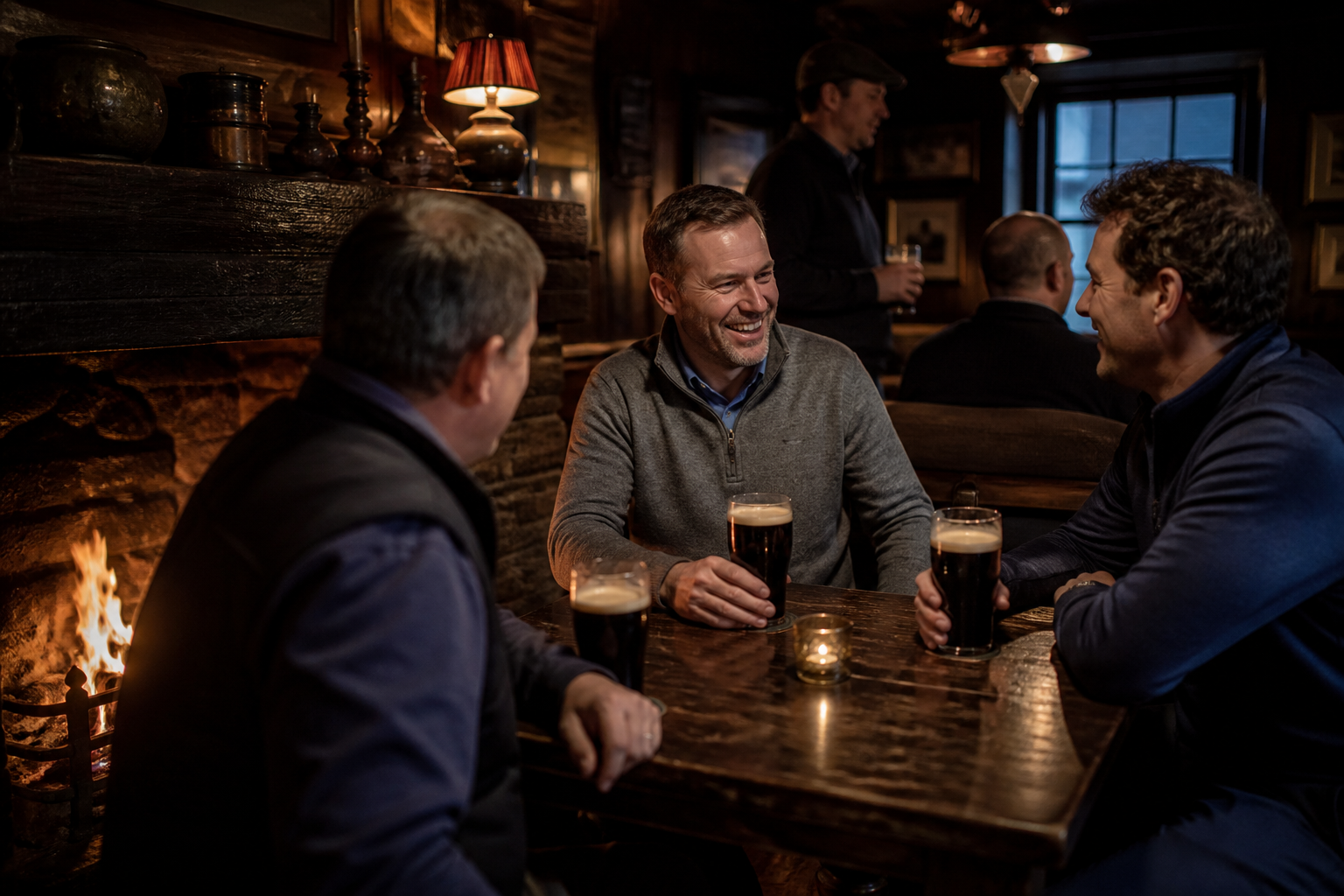
In Scotland, golf is a religion. In Ireland, it is a conversation. The 19th hole experience on the west coast is mandatory. After putting out on the 18th at Lahinch, the move is to walk directly into town to a local pub.
Settle into a booth near a peat fire, order a pint of stout, and listen. The caddies, the locals, and your playing partners will dissect every bad bounce and heroic par. In Ireland, the scorecard is temporary, but the stories you collect in the salt air last forever.