The PGA TOUR championship format is getting the kind of reset that should make the season finale feel both fair and dramatic. Starting strokes solved one problem and created another: the best regular-season player got a visible advantage, but the tournament itself often felt as if it began before the first tee shot. The next model is cleaner. After eliminating starting strokes in 2025, the Tour has now laid out a 2028 season-ending structure built around a Championship Series Finale and a separate two-week match-play TOUR Championship.

That separate championship is the part fans will feel first. A points race can reward a full year, but match play turns the closing weeks into direct confrontation, where each hole carries its own scoreboard and each mistake has an immediate opponent attached to it.
A proper finale should feel different.
How the PGA TOUR Championship Format Changes
The PGA TOUR’s announced plan creates a clearer ladder into the end of the year. The Championship Series will lead into a Championship Series Finale for the top 90 players on the points list, with the season-long title, bonus money, and TOUR Championship qualification tied to that event. From there, only the top 32 players advance into match play.
That top-32 cut is the hinge. Instead of asking casual fans to decode layers of points projections through the last event, the format creates a simpler question: who has done enough to get into the bracket, and who can beat the player across from him when the season is nearly out of room?
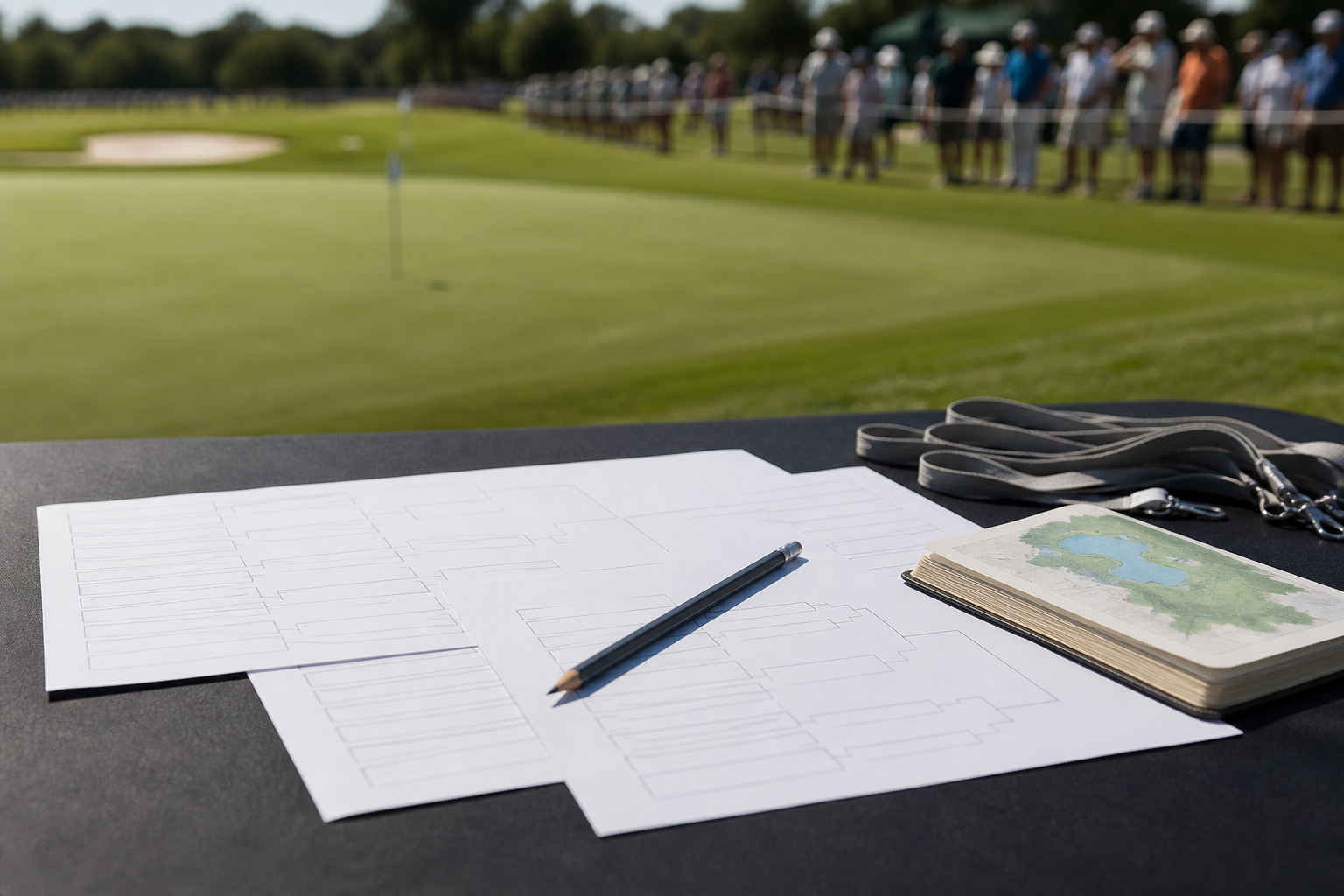
Why Match Play Fits the Moment
Match play gives golf a kind of pressure stroke play rarely shows this plainly. A player can shoot a solid number and still lose because someone else caught fire across the fairway. He can also survive a messy swing if he makes the smarter recovery, controls the spin window on the next wedge, and turns a likely lost hole into a halve.
That rhythm is good television because it makes stakes visible. Fans do not need to understand every FedExCup adjustment to know what a six-footer means when it wins a hole.
The Season-Long Race Still Matters
The new structure does not throw away regular-season value. The top 90 keep status and earn their place in the Finale, then the points list after that event crowns the season-long winner. That distinction matters because year-long excellence and bracket survival are related, but they are not the same achievement.
Year-long excellence deserves its own lane. A player who carries form for months should not be erased by one bad afternoon, yet the final champion should still have to answer a closing format with real jeopardy.
What It Means For Players
The player impact starts with schedule pressure. Once the Championship Series becomes the main road, late-season starts will feel less like bonus opportunities and more like entry points into survival. Players near the top can manage energy; players near the edge will have to weigh rest against the risk of losing ground.
Ground becomes harder to protect when the final gateway is so compact. A top-90 finale leaves room for season-long consistency, but the top-32 match-play line puts a premium on arriving sharp, not simply arriving safe. Poor approach control, cold putting, or a bad week with unwanted spin profiles can turn a comfortable year into a much tighter finish.

What It Means For Fans
Fans get a postseason shape that is easier to explain. The old starting-strokes model made sense on paper, but it could make Thursday feel preloaded. The newer 72-hole stroke-play TOUR Championship fixed part of that problem by putting everyone at even par; the 2028 model goes further by giving the Tour a bracket, a finalist path, and a finale that can be understood at a glance.
That glance matters in a crowded sports calendar. Golf asks viewers to sit with nuance, and nuance is part of its charm, but the final weeks need a clean spine. A season-long winner, a top-32 cutoff, and two weeks of match play give the broadcast something sturdier to build around. For more week-to-week pro golf context, follow USA Golf Magazine’s Tour coverage.
Why Everyday Golfers Should Care
Everyday golfers may never play for a FedExCup point, but the format still changes how the sport feels from the couch. Match play reveals decision-making in a way weekend players recognize: when to attack a tucked pin, when to accept center green, when a conservative tee ball is smarter than chasing a hero line over trouble. The same course-management instincts that save a 14-handicapper from a double bogey can decide a match when the best players in the world are forced into head-to-head pressure.
That shared language is valuable. It lets the broadcast talk about risk, launch windows, turf interaction at impact, and short-game nerve without burying the viewer in standings math.
The Risk Is Overdesign
The danger is that golf can make simple ideas feel complicated by naming every layer. Championship Series, Challenger Series, Finale, TOUR Championship, season-long winner, TOUR Champion: those labels need careful handling on television and in coverage. The format will work best if viewers hear the same plain explanation every week.
Plain explanation should become the Tour’s best friend here. Keep the graphic simple, show who is safe, show who is chasing, and let the matches carry the emotional load once the bracket begins.
Why This Could Work
The strongest part of the plan is that it admits one old truth about golf: one format cannot perfectly measure everything. Stroke play is still the best way to reward a full field over four rounds. Match play is better at producing direct pressure, tactical contrast, and moments that feel decisive as they happen.
Those decisive moments are what the TOUR Championship has sometimes missed. The new model gives the PGA TOUR a chance to crown the season, then stage a final championship that actually feels like players are being forced through a closing door one match at a time.
If the execution stays clean, the new championship format could make the end of the PGA TOUR season easier to follow and harder to fake. That is the combination the finale has needed: a year-long race with value, a bracket with consequence, and enough room for the best players to decide it with shots rather than spreadsheets.