
Fifty-two days after his last competitive round in Memphis, Jordan Spieth has crossed the Pacific to Yokohama carrying a reassuring report about his body and an unfinished argument with his golf. The wrist, he says, permits him to play freely. The scorecard still owes him evidence.
At Yokohama Country Club, the argument will resume among formidable company. Defending champion Xander Schauffele, Collin Morikawa, Justin Thomas, and Hideki Matsuyama join the Baycurrent Classic’s field. From October 8 through 11, seventy-two players will contest an $8 million purse over four rounds, without a cut. That guarantees Spieth a weekend. It guarantees him very little else.
The same week has brought another figure into golf’s conversation: $24 million committed to Pro Shop, a company building businesses around the game’s stories, personalities, and appetite for entertainment. In Japan, a golfer seeks continuity. In the boardroom, investors seek expansion. Both enterprises depend on giving people a reason to keep watching.

Jordan Spieth at Yokohama: The Body Gives Permission
“I feel as healthy and strong as ever,” Spieth said at his Tuesday press conference. He described the physical restrictions of recent years as having lifted. His account of the intervening weeks was refreshingly ordinary: nearly a month away, time in Montana, then a return to work. He spoke of sounder mechanics and attention to putting, short game, and scoring.
For a player whose finest golf has made recovery seem almost theatrical, such an inventory carries weight. A body that allows the intended motion restores a basic privilege. A tournament asks whether that motion survives an awkward lie, a difficult yardage, and the knowledge that the last putt should have fallen.
Spieth finished tied nineteenth at the FedEx St. Jude Championship on August 16. His playoff position of fifty-second left him outside the top fifty and their comprehensive Signature Event access. He arrives in Japan fifty-fifth in the FedExCup Fall standings, with no top-ten finish this season. There have been respectable weeks, enough to keep him close, without the sustained contention that would give this return a different complexion.
Fifty-fifth has a particular meaning. Players finishing the fall between fifty-first and sixtieth earn places in the 2027 Pebble Beach Pro-Am and Genesis Invitational, the first two Signature Events. Spieth already occupies that corridor. His business is to strengthen his position and remain there through the fall; those two invitations would give him an opening into next season’s richest competition.
A modest-looking number can exert considerable pressure when it determines where a celebrated player gets to work.
A Course With Its Own Memory
Yokohama offers an apt setting for that pressure. The club opened in 1960, and its West Course underwent a substantial Coore and Crenshaw renovation between 2014 and 2016. The architects worked with the original terrain and the course’s inherited character, preserving the relationship between valleys, ridges, and the decisions a golfer must make.
That history complicates the convenient description of a classic, penal Japanese course. Here is a place shaped by Japanese origins and later American architectural judgment, receiving players whose equipment can cover distances its founders could scarcely have anticipated. Its authority rests in how the ground arranges the next shot.
Under Yokohama’s pines, scenery becomes strategy. Rolling ground changes the view of an approach; a green’s contour begins to matter long before the ball reaches it. The golfer who surveys only the flag has taken an incomplete reading.
The tournament’s par-seventy-one routing draws sixteen holes from the West Course and two from the East. Its rough supplied a stern measure last year: players successfully scrambled from it only 41.7 percent of the time, the second-lowest rate on Tour. A missed green could leave a disproportionately expensive repair.
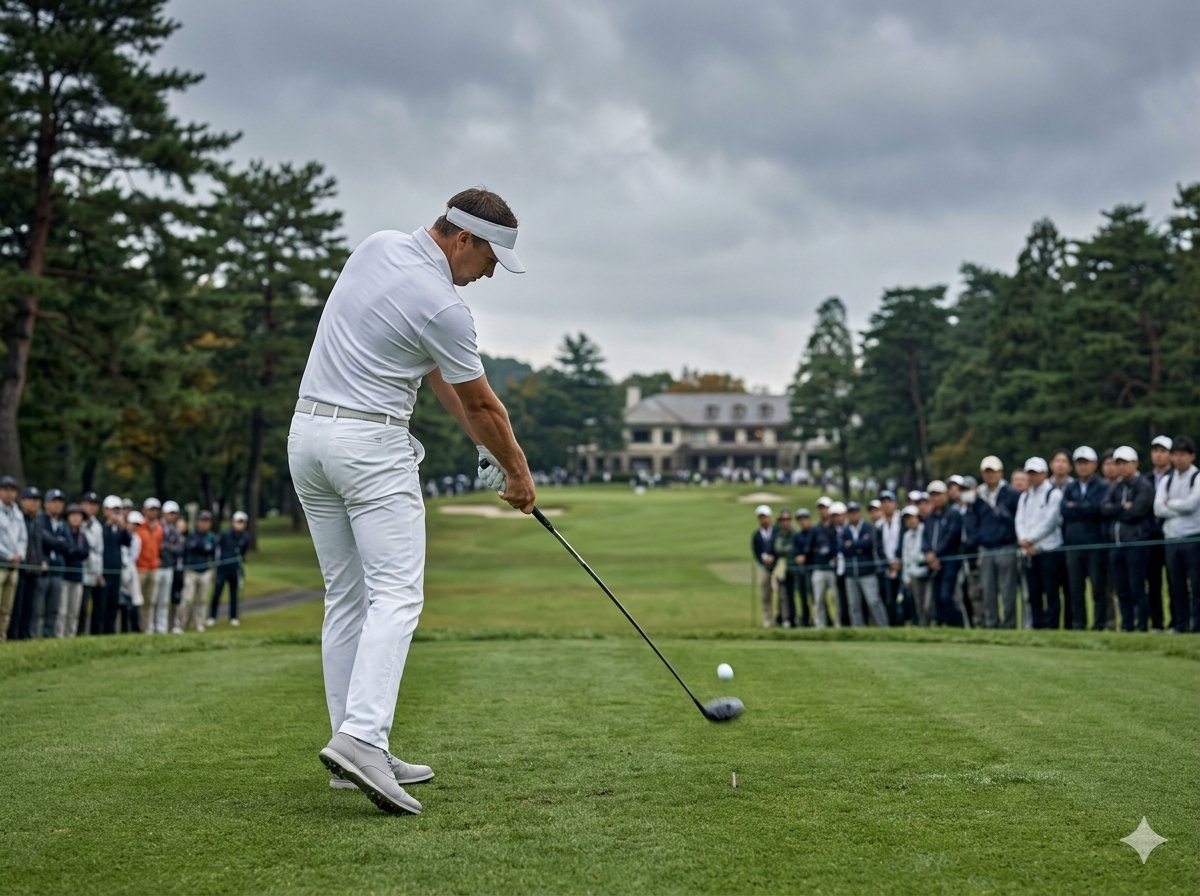
Schauffele returns with the advantage of having won here. Morikawa’s approach play, Thomas’s capacity for invention, and Matsuyama’s stature before a home audience give the week several centers of gravity. Spieth must establish his own through the unglamorous sequence of finding position, choosing a target, and delivering the ball there.
The course should make that sequence visible. Watch where an approach finishes, and what sort of putt or recovery it leaves. A ball on the green can still be some distance from a good shot.
What the Ocean Can Teach
Golf has long sent its accomplished men abroad to discover which parts of their game travel.
In 1953, Ben Hogan arrived at Carnoustie already holding that year’s Masters and U.S. Open titles. His sole Open appearance required adjustment to unfamiliar conditions and the smaller British ball. He prepared at nearby Panmure, then improved through rounds of 73, 71, 70, and 68 to win by four strokes. The sequence remains one of the game’s most eloquent demonstrations of learning while competing.
Hogan’s example invites care. He reached Scotland with his rebuilt game already producing major championships. Carnoustie tested its adaptability. Spieth reaches Yokohama seeking a competitive return from work that he believes has put his mechanics on firmer ground.
The useful kinship lies in submission to a fresh examination. Foreign turf removes some familiar references. The golfer must establish distances, read new contours, and accept the answers without appealing to an old reputation.
At Carnoustie’s sixth, Hogan took the narrow route left of the fairway bunker, alongside the boundary, to improve his approach to the par five. The lasting image is a golfer accepting a small margin because he understood what it bought him farther ahead.
A player with Spieth’s imagination has abundant ways to recover. The more consequential achievement may be reducing the need. Four days in Japan can reveal whether an approach repeatedly finds its intended portion of green, whether an ordinary putt receives an ordinary stroke, whether a round gathers itself instead of requiring rescue.
Such evidence accumulates quietly. Even a champion’s renewal has to begin with shots small enough to repeat.
Twenty-Four Million Dollars for the Next Audience
Quiet accumulation has acquired competition in the business of attention.
On October 5, Pro Shop announced a $24 million Series B financing round led by Arthur M. Blank Sports and Entertainment, with the PGA Tour participating as a returning investor. The capital is earmarked for digital media, original programming, talent-led franchises, live events, competition formats, and commerce. The $24 million is the total funding round; individual contributions were not disclosed.
The company’s holdings include Pro Shop Studios, Skratch, GolfWRX, and Sugarloaf Social Club. Their combination brings filmed entertainment, equipment conversation, online communities, and golf apparel into the same commercial orbit.
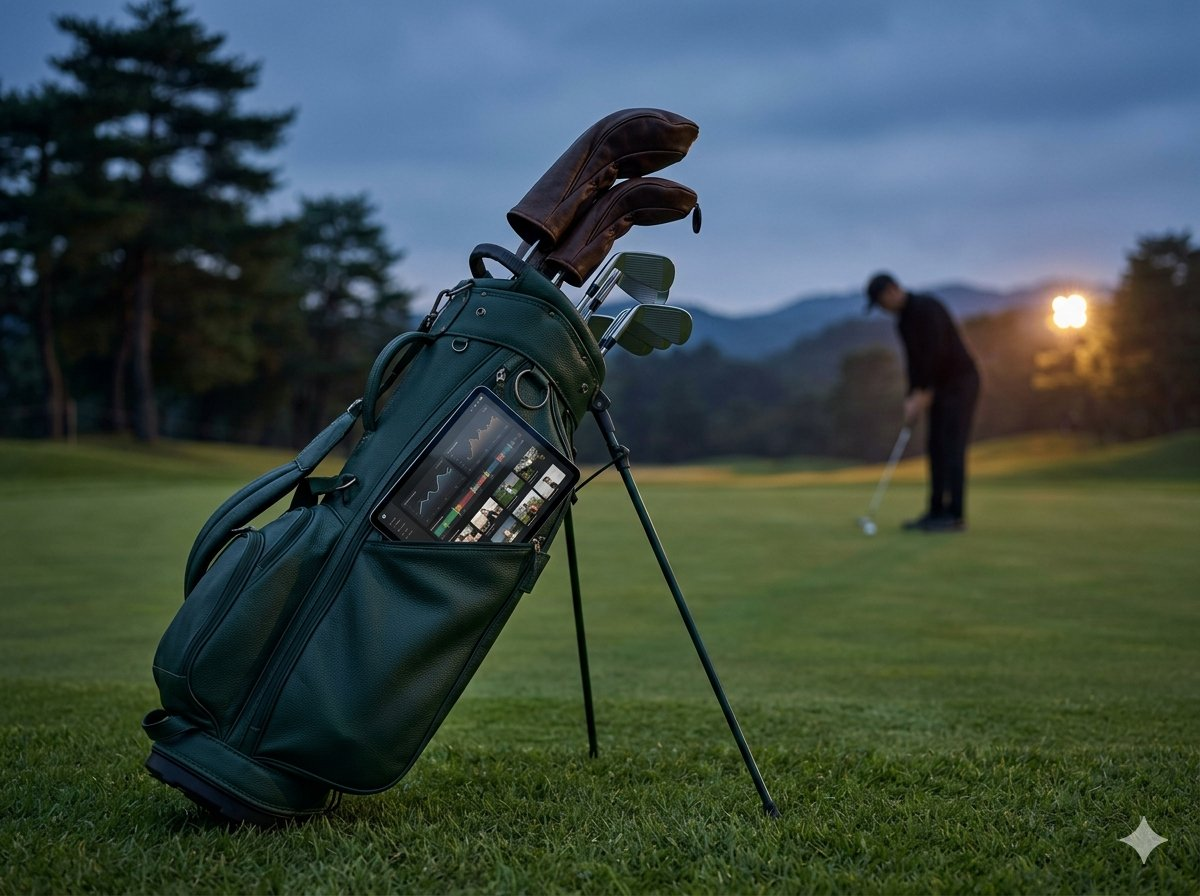
The bet, as those plans suggest, is that golf can earn attention through many entrances. A viewer may meet a player through a documentary, linger over a creator’s course visit, argue about a club online, and eventually arrive at the tournament. For an American audience following an event across a substantial time difference, that continuing conversation has obvious commercial appeal.
Spieth supplies the kind of unresolved story such businesses value: recognizable achievement, a prolonged interruption, and a future that still requires proof. The challenge for coverage is to stay attentive when his golf becomes uneventful. A sequence of sensible pars may explain more about his progress than a spectacular escape.
Financing can pay for the screens, the networks, and the modern digital architecture to capture the game. But out on the turf of Yokohama, the game itself remains an analog reality—won or lost by a lone man trying to find the center of the clubface.