Quick Answer
AI on the Fairway: How the New Callaway Quantum Max Driver is Changing Distance Expectations for 2026: A conversational 2026 editorial on why Callaway’s Quantum Max is shifting driver distance talk from peak speed to repeatable carry and playable dispersion.
- Category: Trending
- Read Time: 4 min
- Best Use: Apply this as your first decision framework, then validate with your own data.
You know the feeling: you hit one that feels centered, the flight looks solid, and then the carry number still comes up five yards short of what you expected. For a lot of players, that gap between “good swing” and “real distance” is the most frustrating part of modern driver play.
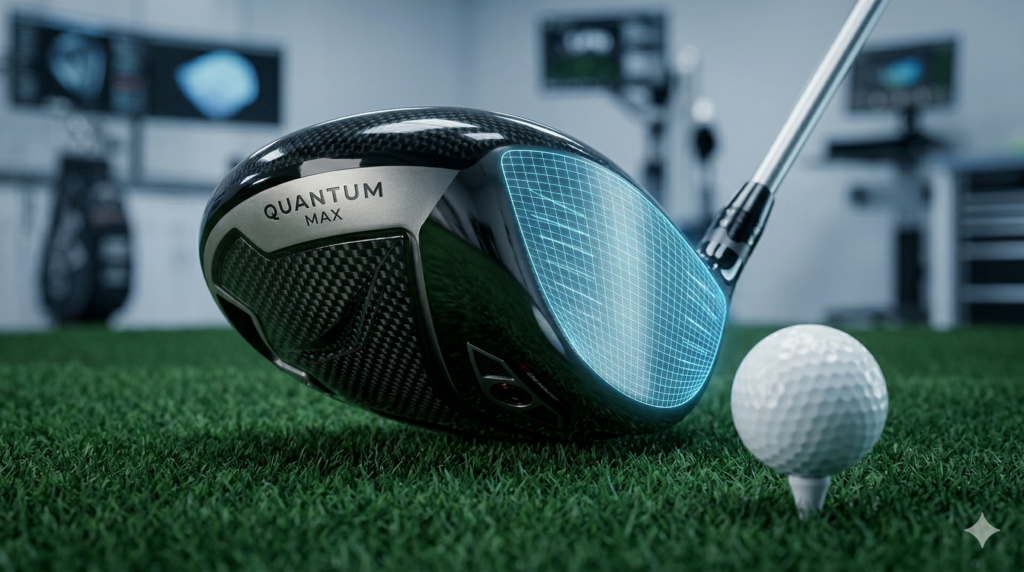
That is exactly why the Callaway Quantum Max is getting so much buzz this season. The 2026 conversation is not just about raw speed anymore. It is about whether AI-led face and weighting design can protect distance when your strike drifts low-heel, high-toe, or slightly thin.
Why This Story Matters Right Now
Distance expectations have changed because launch monitor access has changed. More golfers are tracking carry, spin, and launch every session, so equipment claims are being tested in real time. If a new driver says it is “more forgiving,” players now expect to see that show up as tighter front-to-back windows, not just marketing language.
The Quantum Max enters that environment with a clear promise: hold speed and playable spin across a wider strike pattern so everyday golfers can keep more “near-best” drives in the fairway window.
The Real Shift: Distance Is Becoming a Consistency Metric
Old distance talk centered on your single longest ball. The 2026 lens is different. Golfers care about average gamer speed and carry over ten swings, not one outlier bomb with perfect timing.
That is where AI face tuning gets interesting. The practical value is not magic speed. It is reducing the penalty when impact moves away from dead center. If your miss only loses a little ball speed instead of a lot, your on-course driver strategy becomes more aggressive and more confident.
How the Quantum Max Fits the 2026 Driver Trend
The broader market has split into two lanes: ultra-low-spin heads for high-speed players and high-stability “max” heads for golfers who want easier launch and fewer big misses. Quantum Max sits in that second lane.
That does not make it a beginner-only product. It makes it a practical fit for players who value playable launch, speed retention, and a face that does not punish slight strike drift as harshly as compact, low-spin models.
What Golfers Are Noticing in Early Sessions
- Higher confidence on tee shots where contact quality varies: The “bad one” is often less destructive.
- More repeatable carry windows: Front-to-back distance control looks tighter for moderate-speed players.
- Cleaner misses in pressure holes: Players report fewer drives that immediately force recovery golf.
- Easier launch from neutral setups: Less need to manufacture extra dynamic loft at impact.
None of this means every player gains the same number. It means the head profile is built to preserve useful distance when swing delivery is human, not perfect.
The Lifestyle Angle: Why This Matters for Weekend Rounds
Most golfers are not optimizing a tour truck build every week. They are trying to show up on Saturday, hit enough quality tee balls, and enjoy the round with less tension on tight opening holes.
When a driver gives you one more club into par 4s because your average carry climbs, the day feels different. Pace improves. Second-shot options open. And the mental load of steering the driver all round drops.
What to Test Before You Buy
If Quantum Max is on your shortlist, do not judge it on three swings. Run a simple A/B session:
- Track 10-12 shots with your current driver and 10-12 with Quantum Max.
- Compare average carry, not best ball.
- Check left/right dispersion and front-to-back spread.
- Note strike location on each head to see how speed retention behaves.
That process tells you whether the AI-forgiveness pitch translates into your real pattern.
The Takeaway
The Quantum Max is not redefining distance by turning everyone into a high-speed bomber. It is redefining distance expectations by making more swings count.
For 2026, that is the smarter benchmark: not “Can this driver produce one huge number?” but “Can this driver keep my normal swings long enough and straight enough to lower scoring pressure over 18 holes?”
Related: News section
FAQ
What is the key takeaway from this story?
A conversational 2026 editorial on why Callaway’s Quantum Max is shifting driver distance talk from peak speed to repeatable carry and playable dispersion.
Why does this matter right now?
It affects the next decision golfers make, whether that is equipment selection, planning, practice, or competitive context.
Where can I go deeper on this topic?
Use the related links in this section and the category hubs to compare additional models, methods, and scenarios.