
Quick Answer
The 10-Minute Warm-Up That Added 7 MPH Ball Speed: A practical 10-minute pre-round warm-up that improves sequencing, raises ball speed, and protects strike quality under first-tee pressure.
- Category: How-To
- Read Time: 4 min
- Best Use: Apply this as your first decision framework, then validate with your own data.
You have felt this before: first tee swing, tight shoulders, quick transition, and 5 to 10 yards missing before the round even starts. Most golfers do not need a harder swing. They need a better launch sequence.
This routine has one job: raise usable ball speed in 10 minutes without losing center contact. Use it before practice or a round, then compare your first three drivers to your normal start.
Why This Warm-Up Works
Speed comes from order, not strain. When your torso, pelvis, and arms sequence correctly, the club loads and releases faster with less effort.
Think of skipping a stone. Smooth rhythm plus late speed beats early force every time.
The Gear Bag
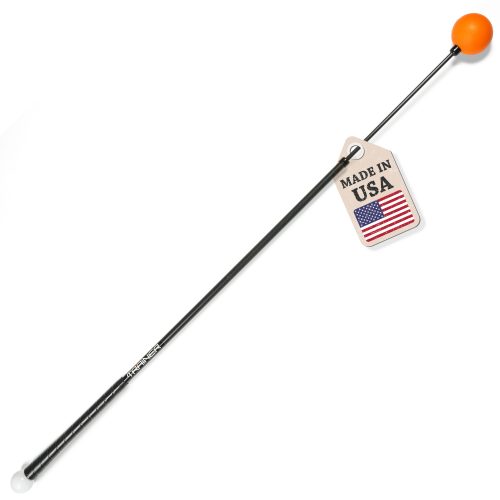
- Tempo trainer: Orange Whip Trainer for rhythm and balance feedback.
- Speed trainer: LightSpeed Trainer for fast-twitch activation.
- One alignment stick: shoulder and path reference during rehearsals.
- Simple baseline: your normal carry or ball-speed average from recent rounds.
Comparison Table
| Warm-Up Tool | Real Product Image | Use in This Routine |
|---|---|---|
| Orange Whip Trainer | |
Build tempo, posture, and sequence without forcing speed |
| Orange Whip LightSpeed | 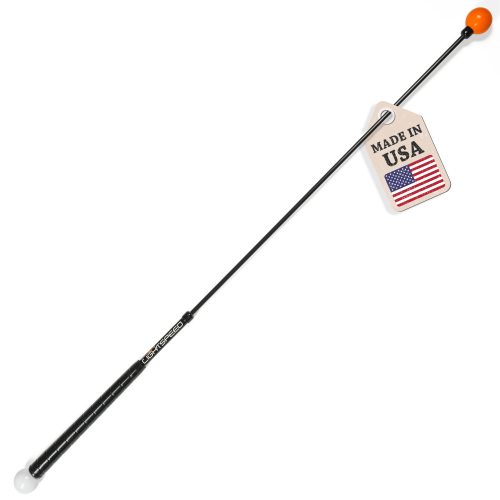 |
Prime fast movement and train late acceleration |
| LightSpeed Action Use |  |
Groove athletic motion before hitting balls |
Your 10-Minute Ball-Speed Routine
Step 1: Loosen your thoracic turn (2 minutes)
Make slow rehearsal backswings with arms across your chest. Rotate until your shirt buttons turn behind the ball line, then return under control.
Keep your lower body quiet. Build range, not strain.
Step 2: Sequence your pivot with the tempo trainer (3 minutes)
Swing the Orange Whip waist-high to shoulder-high, then to full finish. Let the shaft load naturally and listen for smooth whoosh timing.
Feel pressure move trail heel to lead side without a lunge.
Step 3: Activate speed with three intent tiers (3 minutes)
Use the LightSpeed trainer for 3 swings at 70%, 3 at 80%, and 3 at 90% effort per side. Rest briefly between sets.
Chase smooth acceleration, not max violence. Your best speed should feel athletic and repeatable.
Step 4: Transfer to driver with controlled starts (2 minutes)
Hit three drivers at 80% tempo, then three at full intent. Keep one cue only: finish tall on your lead side.
If contact drifts, reduce effort 5% and keep sequence intact.
10-Minute Clock (Fast Reference)
- 0:00-2:00: Thoracic turn rehearsals
- 2:00-5:00: Orange Whip sequence swings
- 5:00-8:00: LightSpeed intent ladder
- 8:00-10:00: Driver transfer swings
Pro Tip
Record only your first five driver swings after this routine. Those swings reveal whether the warm-up transfers to real play, which is what actually matters on the course.
Common Mistake
Do not jump straight from static stretching to max-speed swings. That pattern raises timing errors and low-face strikes. Build speed in layers so your body stays organized at impact.
Take It to the Tee
Run this exact routine three rounds in a row and track first-tee speed plus fairway start line. If your opening swing feels freer and your misses shrink, keep it as your permanent pre-round protocol.
Manufacturer Sources
What This Means for Your Game
The 10-Minute Warm-Up That Added 7 is not just a headline topic. It has direct impact on your next purchase, setup, or on-course decision. We added this section to give you practical, reader-first context in plain language.
At USAGolfMagazine, we prioritize verifiable detail and step-by-step improvement context. That means comparing tradeoffs, identifying who a recommendation helps most, and showing where fit, budget, or conditions can change the best answer.
Quick Practical Checklist
- Define your primary goal before you copy anyone else’s setup.
- Match choices to your actual swing speed, strike pattern, and course conditions.
- Use one consistent benchmark so comparisons stay fair and repeatable.
- Keep notes after rounds so your next adjustment is based on evidence.
If you apply this framework, your decisions around The 10-Minute Warm-Up That Added 7 become clearer, faster, and more repeatable. The goal is not one perfect answer for everyone. The goal is finding the best fit for how you actually play.
As always, revisit this guide after a few rounds and update your plan based on results. Small, measured changes usually beat dramatic overhauls, especially when your objective is long-term consistency.
FAQ
What is the fastest way to apply this lesson?
A practical 10-minute pre-round warm-up that improves sequencing, raises ball speed, and protects strike quality under first-tee pressure.
How often should I practice this move?
Practice in 2 to 3 focused sessions with measurable checkpoints, then keep only the move that holds up under on-course pressure.
What mistake slows progress the most?
Trying to fix everything in one session. Keep one priority and one feedback drill until contact and start line stabilize.