Quick Answer
The 2026 Local Rules Weekend Golfers Should Actually Notice: A practical look at the 2026 golf rules clarifications most likely to affect everyday rounds, league nights, and club events.
- Category: News
- Read Time: 6 min
- Best Use: Apply this as your first decision framework, then validate with your own data.

Most rules updates are not written for a Saturday foursome arguing over a cart-path drop. They are written for committees, officials, tournament staff, and clubs that need consistent wording. But the 2026 clarification cycle has a few practical pieces that everyday golfers should understand before league night, a club championship, or a weekend round where local rules are in play.
The short version is this: the latest clarification material does not ask regular golfers to memorize a new rulebook. The R&A’s April 8, 2026 update notes that additional clarifications are normally updated quarterly, and the USGA-hosted April document says there were no new April clarifications. The important part for most players is that several 2026 Model Local Rule updates now give committees clearer ways to handle situations golfers actually run into.
If you want the broader background first, start with our plain-English guide to what actually changed in golf’s 2026 rules updates. This article is the practical follow-up: what to look for on the starter’s sheet, what to ask in a tournament, and what not to assume during a casual round.
Start With One Simple Question: Is It Actually In Effect?
The phrase “Model Local Rule” matters. A Model Local Rule is not automatically active just because it exists in the official guidance. It becomes relevant when a committee, course, league, or event adopts it for play. That is why the first move is boring but useful: read the local rules sheet, check the scorecard notice, or ask the shop before assuming a special relief option or restriction applies.
This is especially important for golfers who move between casual rounds and organized events. A club event might follow the Rules of Golf plus a specific local-rules sheet. A state or regional qualifier might be stricter still. The same course can feel different depending on who is running the round.
The Club-Damage Rule Is The One Most Golfers Will Notice
The most relatable 2026 item is Model Local Rule G-9, which deals with replacing a broken or significantly damaged club. The official clarification says Rule 4.1a(2) allows a player to repair or replace a club damaged during a round, except in cases of abuse. But if a committee adopts G-9, replacement is restricted to cases where the club is broken or significantly damaged.
For everyday golfers, the useful distinction is between cosmetic damage and meaningful damage. A scratched crown or small paint chip is not the same as a shaft that is bent, dented, kinked, splintered, or in pieces. A loose clubhead, visibly cracked face, or audible rattle inside the head is a different conversation.

The rule also protects the spirit of the game. If a player damages a club in anger, that is not treated the same as a club that breaks through normal play. A driver that cracks during a swing is one thing. A wedge bent after being slammed into a cart path is another.
Internal Out Of Bounds Can Change A Hole Quickly
Model Local Rule A-4 gives committees a way to define internal out of bounds for design or safety reasons. The official purpose is to stop players from playing to and from another part of the course, such as cutting across a dogleg by using the fairway of another hole.
For the 10-to-25 handicap player, this can change the smart target on a tee shot. If a white-staked area only applies during play of a certain hole, or only applies to a stroke from a specific teeing area, the local wording decides what counts. Your best “safe miss” from last weekend might be a penalty area in an event if the committee has adopted the local rule.
Embedded Ball Relief And Green-Side Obstructions Need Local Wording
The 2026 guidance also includes updated local-rule language around embedded balls and immovable obstructions near putting greens. These are two places where golfers often feel certain because they have heard a version of the rule before. That confidence can be expensive.
Embedded ball relief can be limited by a committee. Around greens, a committee may provide an extra relief option when an immovable obstruction affects the line of play, but that option can be limited to certain holes, surfaces, or situations. If the local rule is posted, follow it closely. If it is not posted, play under the normal rule and ask before you lift the ball in competition.
Cart Use Can Also Be A Local Rule Issue
Model Local Rule G-6 gives committees a way to prohibit motorized transportation during a round. That will not matter to most casual tee times, but it can matter in qualifiers, club championships, junior events, and certain competitive rounds.
The nuance is that committees can also allow limited transportation, such as shuttle rides between distant holes or specific exceptions tied to stroke-and-distance situations. Again, the sheet in your hand matters more than what your group normally does.
Scorecard Timing Is Mostly A Competition Issue
The April clarification document also includes committee guidance on when a scorecard is considered returned. A competition organizer can define a time-based policy, such as a period after the player leaves the scoring area or after the score is entered electronically.
Most recreational golfers will never need this. But if you play competitive club golf, it is worth knowing before the round starts. Once a scorecard is considered returned, changes become much harder or impossible. Verify hole-by-hole scores before leaving the scoring area, especially if the event uses electronic scoring.
What This Means For Your Next Round
For everyday golfers, the 2026 clarifications are less about new penalties and more about reducing confusion. The governing bodies are giving committees cleaner wording for situations that already happen: damaged clubs, unusual course boundaries, embedded lies, green-side sprinkler heads, cart restrictions, and scoring-area policies.
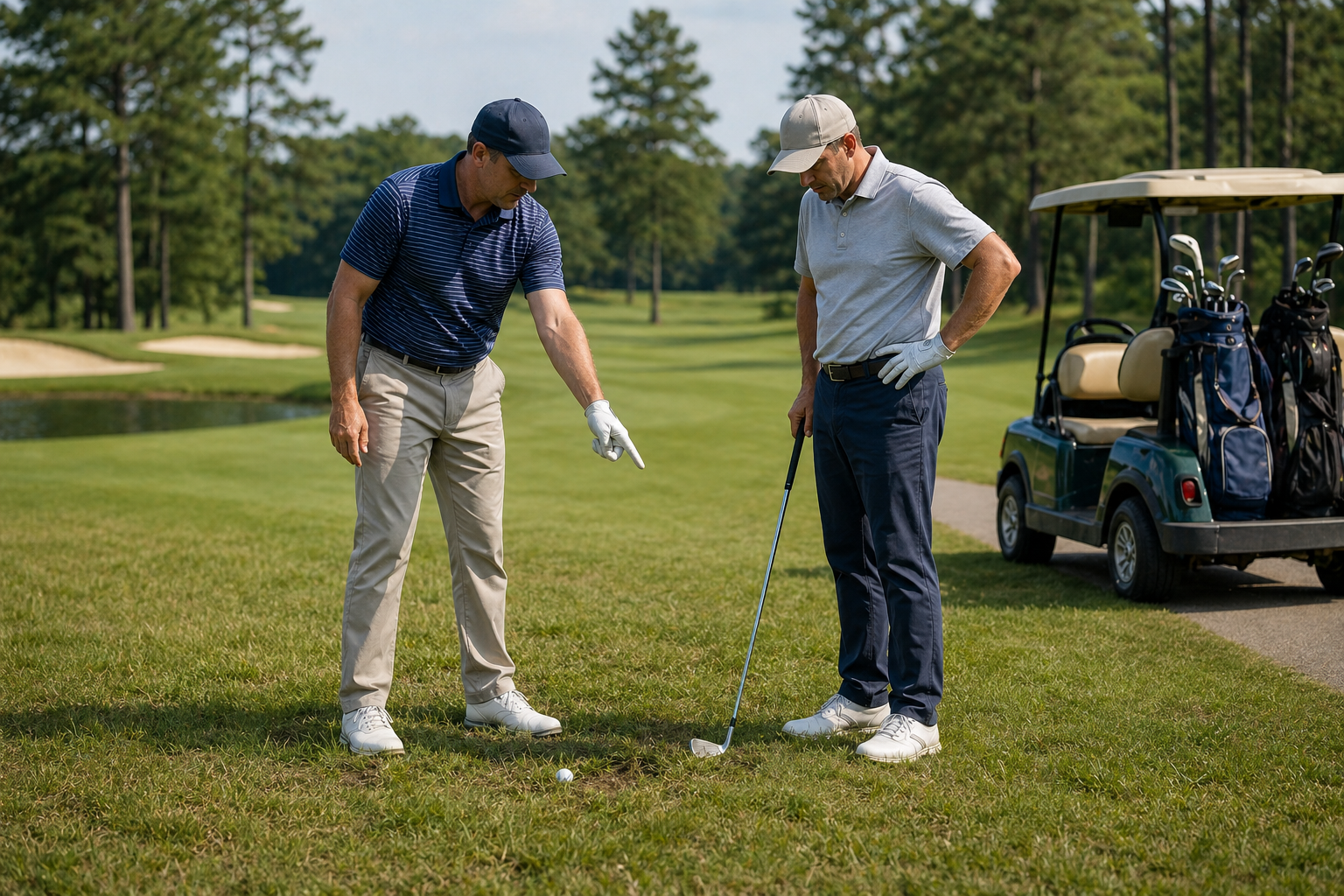
The golfer’s job is not to become a rules official. It is to slow down for thirty seconds when something unusual happens. Ask whether a local rule is in effect. Confirm whether the ball should be lifted. Make sure a club replacement is allowed before putting another club in play. In a competition, get help before guessing.
That approach keeps the round fair without making golf feel like paperwork. And for most players, that is the real value of these updates: fewer arguments, fewer assumptions, and more confidence that the next decision is the right one.
FAQ
Do the 2026 Model Local Rules automatically apply to my weekend round?
No. A Model Local Rule usually matters only when a committee, course, league, or tournament adopts it for that round.
Can I replace a club if it gets damaged during play?
Rule 4.1a(2) allows repair or replacement in certain situations, but if Model Local Rule G-9 is adopted, replacement may be limited to clubs that are broken or significantly damaged and not damaged through abuse.
Is a scratched driver considered significantly damaged?
Usually no. The official examples focus on more serious damage, such as a bent shaft, loose clubhead, visibly cracked face, or loose grip.
FAQ
What is the key takeaway from this story?
A practical look at the 2026 golf rules clarifications most likely to affect everyday rounds, league nights, and club events.
Why does this matter right now?
It affects the next decision golfers make, whether that is equipment selection, planning, practice, or competitive context.
Where can I go deeper on this topic?
Use the related links in this section and the category hubs to compare additional models, methods, and scenarios.