
Quick Answer
What Actually Changed in Golf’s 2026 Rules Updates?: The 2026 Rules updates are real, but mostly conditional.
- Category: News
- Read Time: 5 min
- Best Use: Apply this as your first decision framework, then validate with your own data.
The 2026 Rules updates are real, but they are not a full rewrite of the Rules of Golf. What the USGA and The R&A published for 1 January 2026 is mostly a package of Model Local Rules and clarifications, which means they only apply when a committee chooses to adopt them.
That distinction matters for everyday golfers. If you mostly play club golf, some of these updates may never affect a round at all. Others are worth understanding because they explain how certain situations are handled when a course, committee, or event does use them.
The cleanest way to think about the 2026 golf rules updates is this: they are official, they are relevant, and they are not universal.
What the 2026 updates are, and what they are not
The biggest misunderstanding is assuming the entire Rules of Golf changed in 2026. They did not. The core Rules remain in place, while the 2026 package adds or amends Model Local Rules and clarifications that committees can apply in competition.
That distinction is important because a Local Rule is optional unless it is adopted for the event or course. In plain English, that means your Saturday medal round at one club may be using something different from a televised elite event.
Some of the 2026 updates deal with situations that sound technical, but they exist for practical reasons. The list includes internal out of bounds, embedded ball relief, wrong-place relief when a ball may have moved, line-of-play relief near greens, motorized transportation, and damaged club replacement.
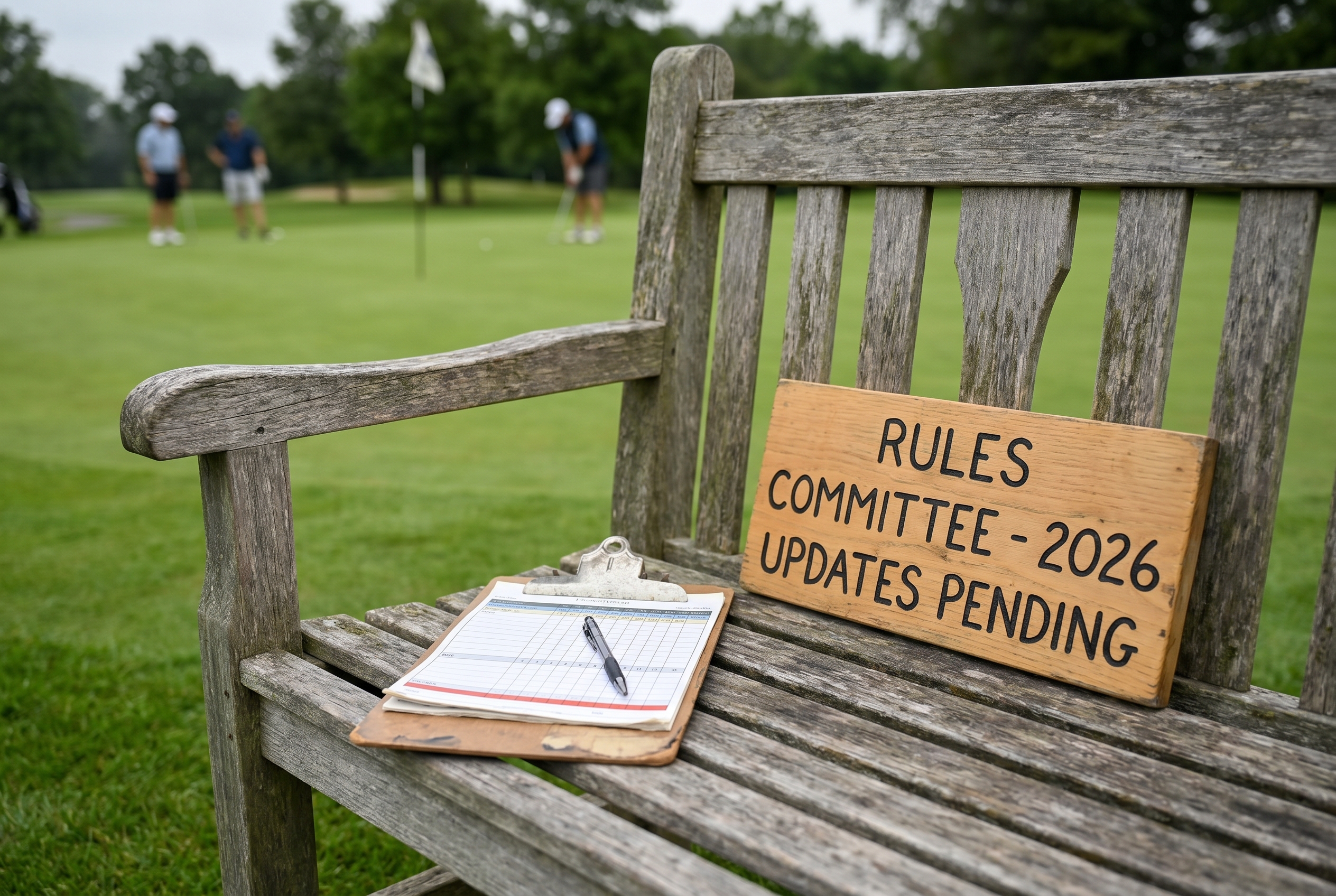
A lot of the attention around these changes comes from higher-level golf, where referees, shot-tracking, broadcasting, and pace-of-play issues matter more. That does not make the updates irrelevant to club golfers, but it does mean most players should not panic and try to memorize every line item.
Which changes matter most to everyday golfers
For most club players, the most useful takeaway is to know when a Local Rule is in play and then read the local notice before you tee off. That is where the real answer usually lives.
If your committee has adopted a 2026 Model Local Rule, it could affect how you handle a specific drop, a relief situation, or a damaged club. But if the Local Rule is not in effect, you keep using the normal Rules of Golf.
The changes most likely to matter to everyday golfers are the ones that simplify common judgment calls. Embedded ball relief and wrong-place relief are classic examples, because they can come up on parkland courses, after heavy rain, or when the ball has shifted and you are not sure what happened.
Internal out of bounds is another good example, especially on modern layouts where a fairway and an adjacent hole can run side by side. A committee may use a Local Rule to manage that setup, but it is not something you should assume automatically applies everywhere.
Motorized transportation and damaged club replacement are also worth understanding, even if they mostly show up in specific competitions or event policies. The point is not that every golfer will deal with them every week, but that the rules now give committees more precise tools when they need them.
If you are playing a casual round, the real-world impact is often tiny. If the score does not matter beyond your own bragging rights, the 2026 updates are mostly background noise. If you are playing a competition, though, background noise turns into something you should actually read.
What club golfers should actually do
If you play casual rounds, the practical response is almost boring, and that is fine. Keep following the standard Rules of Golf unless your club, committee, or event sheet says otherwise.
If you play competitions, especially handicap events or club championships, make a point of reading the local rules before the round. That is where a 2026 Model Local Rule would be spelled out, if it is being used.
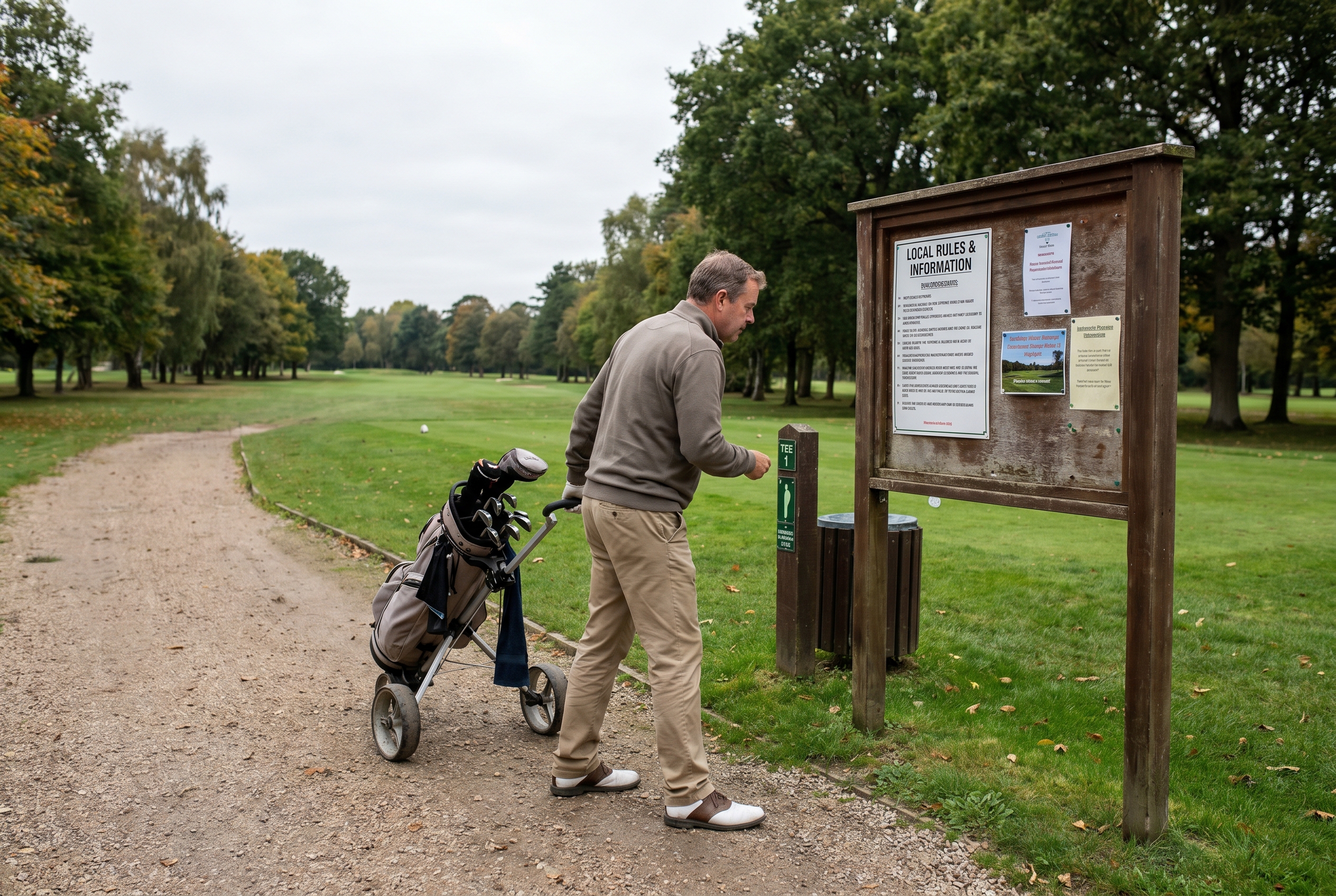
If you are unsure in the moment, play a second ball when the format allows it, record the facts, and ask the committee afterward. That is usually better than guessing and hoping the penalty works out.
It also helps to remember that rules updates are often about clarity, not punishment. In many cases, the governing bodies are trying to make edge cases easier to administer rather than making the game harsher.
That is a useful mindset for everyday golfers. A headline can make a rules update sound like a sweeping change, but the reality is usually narrower. The important question is not “Did golf change?” It is “Does this Local Rule apply to my round?”
For a deeper look at the equipment side of the game, see our Buyer’s Guide to golf rangefinders.
The safest takeaways for 2026
The best short version is that the 2026 golf rules updates are official, but mostly conditional. They matter when a committee adopts them, not everywhere by default.
For everyday golfers, the real skill is not memorizing every new Local Rule. It is knowing where to look, what applies to your event, and when to ask for clarification.
If you remember only one thing, make it this: the Rules of Golf were not rewritten in 2026, but the rulebook got some useful new tools for specific situations.
That is enough for most club golfers. Learn the difference between a core rule and a committee-adopted Local Rule, and you will already be ahead of the average player who only sees the headline.
That is why 2026 Rules updates is worth following as this story develops.
FAQ
What is the key takeaway from this story?
The 2026 Rules updates are real, but mostly conditional.
Why does this matter right now?
It affects the next decision golfers make, whether that is equipment selection, planning, practice, or competitive context.
Where can I go deeper on this topic?
Use the related links in this section and the category hubs to compare additional models, methods, and scenarios.