Quick Answer
How to Fix a Slice: 7 Setup and Swing Changes That Work Fast: A complete anti-slice playbook with seven setup/swing fixes, one instant-feedback drill, and a short range plan you can repeat weekly.
- Category: How-To
- Read Time: 4 min
- Best Use: Apply this as your first decision framework, then validate with your own data.
A slice can feel unfair. You make what feels like a solid swing, then watch the ball start left-center and peel hard right into trouble. The frustrating part is that it often happens with your driver and your confidence at the same time.
The fastest way to fix it is to simplify the diagnosis: your face is open relative to your path at impact. Change those two pieces in the right order, and straighter shots show up quickly.
Why the Ball Curves Right (for Right-Handed Golfers)
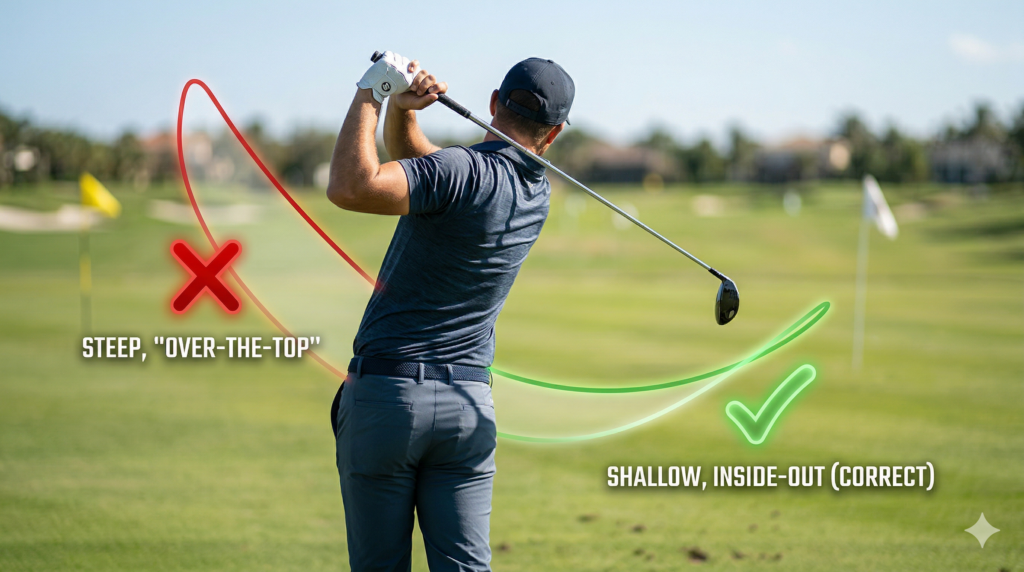
A slice is mostly a face-to-path problem. If your club path is left and your face is even farther right of that path, spin tilts right and the ball bends right. You can fight it with timing, but timing rarely holds up under pressure.
Instead, build a pattern where setup supports an inside delivery and a more neutral face. Think process over rescue.
The Gear Bag
- Alignment sticks (2): One for target line, one for stance/path cues.
- Headcover: Place outside the ball to block over-the-top path.
- Foot spray: Monitor strike location on the driver face.
- Smartphone (slow motion): Capture down-the-line checkpoints every 8–10 swings.
7 Setup + Swing Changes That Work Fast
1) Strengthen Your Grip
Rotate lead hand slightly so 2–3 knuckles are visible at address. Match trail hand so both palms work together. This helps the face return less open without adding late hand flips.
2) Move Ball Position Slightly Back
Many slicers play it too far forward, forcing a glancing blow. Move the ball half a ball back from your current driver position and re-test start line and curve.
3) Close Your Stance a Fraction
Drop trail foot back a few inches to encourage an inside approach. Keep shoulders and eyes committed to the target so you don’t aim your whole body too far right.
4) Set Shoulder Tilt Correctly
At address, let trail shoulder sit lower than lead shoulder. This creates the proper upward strike window for driver and reduces the chopping move that steepens path.
5) Use a Wider Takeaway
Start back with chest and arms together so the clubhead stays outside your hands early. This limits the “inside snatch” that often forces over-the-top compensation later.
6) Drop the Arms Before You Rip Rotation
In transition, feel pressure move lead-side while arms fall first. Then turn. This one beat of sequence helps the shaft shallow and keeps path from moving hard left.
7) Release to the Right Field Window
Through impact, feel the clubhead exit toward right-center field. This promotes a neutral-to-in path and lets the face square gradually instead of staying open.
Instant Feedback Drill: The Headcover Gate
Place a headcover just outside and slightly behind the ball. If you swing out-to-in, you’ll hit it. If you miss it and start the ball straighter, your delivery is improving.
Do 3 rehearsals, then 1 shot. Repeat for 12 balls.
Pro Tip
Track your start line before your curve. If starts are still left, fix path first. If starts are right and still curving right, fix face next. This keeps practice objective and faster.
Common Mistake
Trying to “roll the wrists” to close the face. That creates hooks when timing is good and slices when timing is late. Build neutral mechanics first, then let release happen naturally.
12-Minute Range Plan
- Minute 1-3: Grip + setup checks (Steps 1–4).
- Minute 4-7: Takeaway + transition rehearsals (Steps 5–6).
- Minute 8-10: Headcover gate drill.
- Minute 11-12: Five full swings with one cue only: “inside and square.”
Log two numbers: fairway-width start lines out of 10 and big-right misses out of 10. Improvement in both means your slice pattern is collapsing.
Take It to the Course
On tee shots, choose one external target and one internal cue. Keep the cue simple: arms drop, then turn. You don’t need seven thoughts under pressure.
Fixing a slice is not about finding one perfect swing. It’s about building a reliable delivery pattern that shows up when the hole matters.
Related: Instruction section
FAQ
What is the fastest way to apply this lesson?
A complete anti-slice playbook with seven setup/swing fixes, one instant-feedback drill, and a short range plan you can repeat weekly.
How often should I practice this move?
Practice in 2 to 3 focused sessions with measurable checkpoints, then keep only the move that holds up under on-course pressure.
What mistake slows progress the most?
Trying to fix everything in one session. Keep one priority and one feedback drill until contact and start line stabilize.