Quick Answer
Cobra’s 3DP irons may be the clearest sign yet of a new iron-design lane: Cobra’s 3DP irons are less about novelty and more about a practical new way to keep compact heads playable while moving mass more intelligently.
- Category: Buyer's Guide
- Read Time: 5 min
- Best Use: Apply this as your first decision framework, then validate with your own data.
Cobra’s 3DP irons are notable because they do not look like a science project. That is the point. The company has used 3D printing, a feature that can sound more impressive than it plays, to keep the heads compact while still finding ways to move mass where it helps most.
The bigger story is not that Cobra built one unusual iron. It expanded the idea into a family, with 3DP Tour joined by 3DP MB and 3DP X. That matters because it suggests Cobra is testing a real design lane, not just chasing a headline.
For everyday golfers, the takeaway is simple: these irons are less about novelty and more about a different way to solve an old tradeoff. Better players usually want clean shaping. More forgiveness usually means more bulk. Cobra is trying to reduce how much you have to give up.
What Cobra has actually launched
The safest way to view the Cobra 3DP irons is as a controlled experiment that has already grown past a single release. Cobra started with 3DP Tour, then added 3DP MB and 3DP X, giving the line a three-model structure instead of one lone proof of concept.
That structure matters because it points to where Cobra sees the opportunity. A single model can be dismissed as a one-off. A family suggests a repeatable platform that can serve different swing types and preferences without abandoning the core idea.
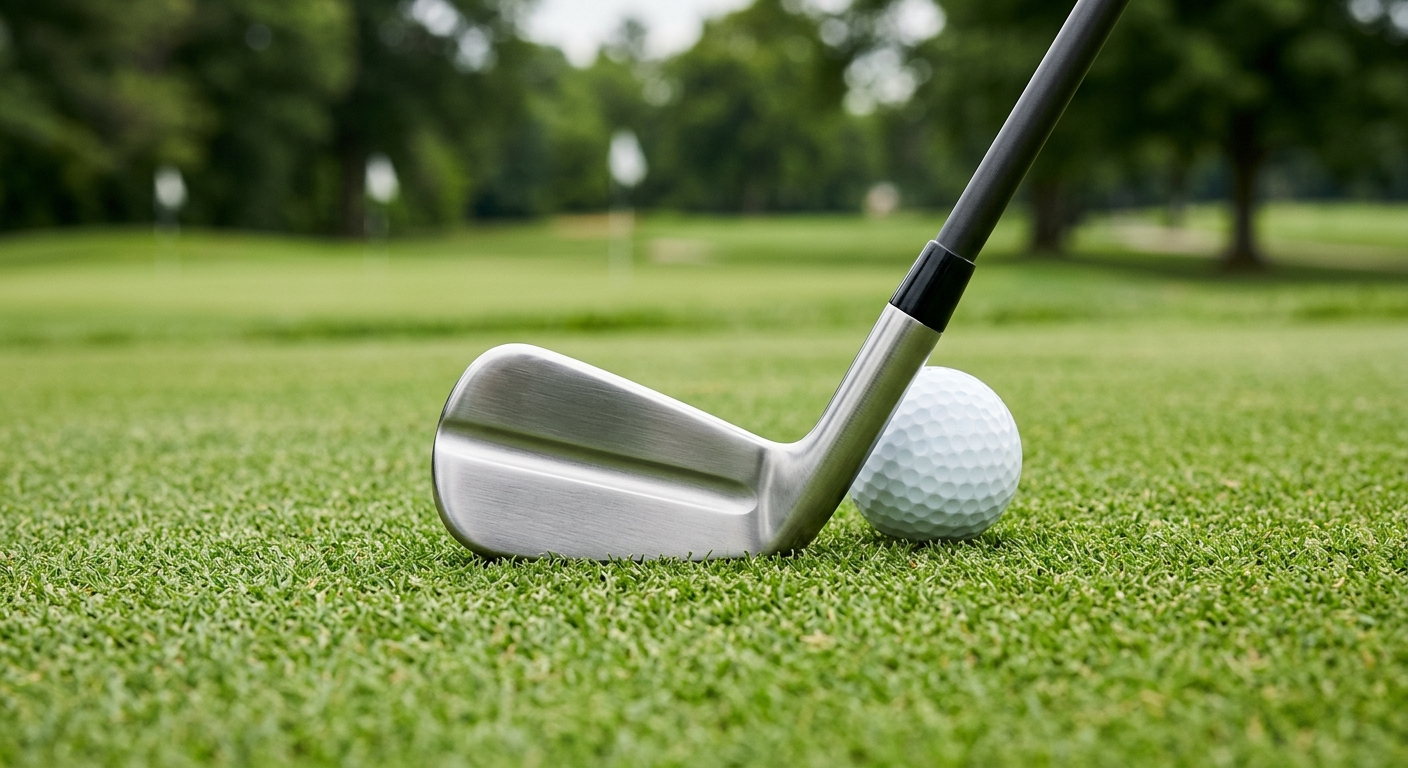
Cobra says the heads are 3D printed from 316 stainless steel powder in 2,600 layers. The company also points to an internal lattice structure that helps free up mass for lower and more perimeter-weighting. In plain English, Cobra is using the printing process not just to make a head, but to engineer space inside the head that traditional forging and casting do not easily allow.
That is why the 3DP line feels more credible than a simple gimmick. It is not 3D printing for the sake of saying it is 3D printed. It is 3D printing as a design tool.
Why the design matters
The promise of the 3DP family is not that iron design has been broken open forever. It is that Cobra has found a cleaner way to solve an old problem: how do you keep a playable, attractive shape and still make the club more stable on less-than-perfect strikes?
The answer seems to come from mass placement. By using the lattice structure to remove material from places that do not need it, Cobra can put weight lower and more toward the perimeter. That tends to help MOI, which is the kind of thing golfers feel when contact drifts toward the toe or heel and the head still behaves better than expected.
That matters especially in compact irons, where designers usually have less room to hide forgiveness. A lot of players want the look of a blade or near-blade but do not want blade-level punishment. Cobra is trying to narrow that gap.
There is also a fitting angle here. A multi-model 3DP family gives golfers and fitters more room to build a set that follows the same visual language from one end of the bag to the other. That continuity can matter for players who want to blend a more precise short-iron profile with something a little more helpful in the long irons.
That does not mean the line is for everyone. It probably is not. But it does mean Cobra is addressing a real middle ground, the player who wants better-player looks without signing up for a harsh miss.
What this could mean for iron fitting
Cobra’s 3DP family is most interesting when you think about fitting, not just marketing. Better players usually want options that can be mixed and matched, and the 3DP structure gives Cobra a platform for that. If the heads keep a similar visual identity while changing subtly in forgiveness and profile, fitters get more ways to build a set that feels coherent.
The other thing worth watching is how the 3DP line changes expectations around what a forged or compact iron needs to be. For a long time, the category has been built around a fixed bargain: sharp looks if you can accept less help, more help if you can live with a bigger shape. Cobra is poking at that bargain.
That is why the line has attracted attention from players such as Max Homa, Lexi Thompson, and Rickie Fowler. Tour usage does not prove anything by itself, but it does signal that Cobra is pushing the idea into serious-player territory rather than leaving it as a showroom concept.
This is also where language needs care. Cobra’s earlier LIMIT3D irons were widely discussed as the first commercially available 3D-printed irons, so it is safer to say the new 3DP family expands on that history instead of claiming it invented the category from scratch. The headline here is evolution, not absolute firsts.
If you are trying to place the line in the market, that is probably the right frame. Cobra is not proving that every company will rush to 3D printing tomorrow. It is showing that the method can support a more practical iron story than many people expected.
Where the 3DP line lands
The most useful way to read Cobra’s 3DP irons is as a sign of design freedom, not a verdict on the future of the market. They show that 3D printing can do something meaningful when the goal is to preserve shape while redistributing weight in smarter ways.
That alone makes the line worth paying attention to. It offers a believable answer to a real golfer complaint, which is that some compact irons look great but ask too much on imperfect strikes. Cobra’s bet is that players want cleaner shapes and a little more help than traditional designs usually allow.
For now, that is enough to make the 3DP family notable. It may not have rewritten iron design yet, but it has clearly opened a lane that other brands will be watching.
For readers who want the model-by-model breakdown, see our Cobra 3DP irons Buyer’s Guide.
FAQ
Who is this comparison best for?
Cobra’s 3DP irons are less about novelty and more about a practical new way to keep compact heads playable while moving mass more intelligently.
What should I prioritize first when choosing gear?
Prioritize your miss pattern and launch window first, then refine by feel, adjustability, and price.
Can I use this guide without a paid fitting?
Yes. Use the table to create a 2-3 model shortlist, then test those options side by side before final purchase.